The Best Diving Socks and Booties for Spearfishing Comfort
Introduction
If you’ve ever cut a dive short because your feet were numb, or spent the surface interval peeling off a blister, you already know this: foot comfort isn’t optional in spearfishing. It directly affects your focus, your mobility, and ultimately how long you can stay in the water. The right pair of spearfishing dive socks solves these problems before they start. They keep your feet warm, improve the fit of your fins, and create a barrier between your skin and your gear that prevents chafing and blisters. This article is written for spearfishers—whether you’re just starting out or you’ve been hunting for years—who want to upgrade their foot gear for better comfort, performance, and durability. We’ll cover the difference between socks and booties, what features to look for, common mistakes to avoid, and which specific products are worth your money. By the end, you’ll know exactly which pair fits your conditions and your budget.
Why Foot Comfort Matters in Spearfishing
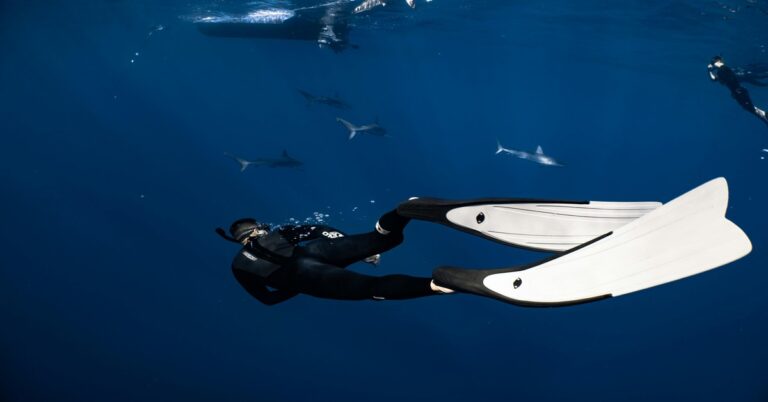
Your feet do more work underwater than most people realize. They constantly adjust your fin angle, help you stabilize in current, and push against resistance with every kick. When your feet get cold, you lose fine motor control and stamina. Cramps set in faster, and that reduced mobility can cost you a shot at a fish. Worse, cold feet are a safety issue—they can trigger premature fatigue and force you out of the water earlier than planned.
Blisters are another common problem. Even a small hot spot from a poorly fitted fin pocket or a rough seam can become a major distraction during a long session. Once that blister forms, every kick is painful, and your focus shifts from hunting to discomfort. Chafing at the ankle seal between your wetsuit and sock is another issue that gets ignored until it’s raw and stinging.
The takeaway is simple: gear that doesn’t fit your feet correctly isn’t just annoying—it holds you back. Quality dive socks and booties solve these specific problems. They provide insulation, cushioning, and a smooth interface with your fins. Investing in good foot gear is one of the most practical upgrades you can make for your time in the water.
Dive Socks vs. Booties: What’s the Difference?
Before we get into specific products, it helps to clarify a distinction that confuses a lot of spearfishers. Dive socks and booties serve different purposes, and choosing the wrong type can make your fins uncomfortable or ineffective.
Dive socks are thin neoprene sleeves, typically 1.5mm to 3mm thick. They are designed to be worn inside full-foot fins. Their primary job is to add a layer of insulation and friction protection between your skin and the fin foot pocket. They don’t have a sole, so they are not meant for walking—you put them on right before you get in the water. They are best for warm to temperate water where you don’t need heavy insulation and you want a close, snug fit with your fins. Divers who need this type of foot covering can browse options for dive socks to see what is available.
Booties are thicker and more substantial. They range from 3mm to 7mm neoprene and typically have a reinforced rubber sole. Booties are designed to be worn with open-heel fins, which have a strap at the heel. The sole protects your feet if you need to walk across rocks, sand, or a boat deck. Booties are the standard for cold-water spearfishing and for any situation where a walk-in is required. The tradeoff is a slightly bulkier feel in the fin, and you need to size your open-heel fin pockets to accommodate the bootie’s volume.
If you primarily use full-foot fins in warm water, dive socks are the answer. If you use open-heel fins, or if you frequently walk into your spots, choose booties. The rest of this article covers both categories, so you can find the right type for your setup.
What to Look for in Spearfishing Dive Socks
Not all dive socks are built the same. Here are the key specifications to evaluate before you buy.
Neoprene thickness. This is the most obvious variable. For warm water (above 22°C / 72°F), 1.5mm to 2mm socks are sufficient. They add minimal bulk and fit easily inside most fin pockets. For temperate water (18-22°C / 64-72°F), 3mm is the sweet spot. For cold water (below 18°C / 64°F), you will want 5mm or thicker booties. The thicker the neoprene, the less flex you have in your ankle, so go as thin as the water temperature allows.
Material backing. Socks come with either a smoothskin (smooth rubber) outer surface or a nylon-backed outer surface. Smoothskin is warmer and seals better against the fin pocket, but it is more fragile and harder to pull on. Nylon-backed is more durable and easier to slide into fins, but offers slightly less insulation. For most spearfishing applications, nylon-backed is the practical choice because durability matters more than a marginal warmth gain.
Seam construction. This is critical. Glued and blind-stitched (GBS) seams are the gold standard. They are sewn through only half the thickness of the neoprene and glued to prevent water from flushing through. Flatlock seams are cheaper but they are also thicker and let water pass through, making them colder. Always look for GBS construction in anything above 2mm.
Sole reinforcement. If you are buying booties, look for a thick molded rubber sole. A good sole protects your feet from sharp rocks, oyster beds, and hot boat decks. Some dive socks have a thin anti-slip pad, which is better than nothing for a brief walk, but not comparable to a real sole. If you walk to your spot, prioritize sole quality.
Closure systems. Booties often include a side zipper or a Velcro strap to secure them. Zippers are convenient for entry and exit but create a potential failure point. Many spearfishers prefer simple pull-on booties without zippers for simplicity and reliability. If you choose a zippered bootie, make sure the zipper is made of corrosion-resistant material like brass or plastic.
Mistakes Spearfishers Make When Choosing Foot Gear
After years of being in the water and helping other divers sort out their gear, I’ve seen the same mistakes come up again and again. Here are the ones to avoid.
Buying socks that are too thick for the fin pocket. This is the most common error. A 3mm sock might fit fine in a generously sized fin, but jammed into a tight pocket, it crushes the neoprene and ruins its insulation. Worse, it can compress your toes and cause cramps. Always try your socks with your exact fins before you commit to a thickness.
Assuming all neoprene is the same. Cheap neoprene uses open-cell foam that absorbs water and turns cold quickly. Higher-grade neoprene is compressed and contains more gas bubbles, making it warmer and lighter. You pay for that difference. Do not expect a $15 pair of socks to perform like a $50 pair in cold water.
Ignoring the ankle seal interaction. The cuff of your dive sock or bootie overlaps with the ankle seal of your wetsuit. If the sock cuff is too short or too thick, you can get a gap that flushes cold water into your suit. This is uncomfortable and defeats the purpose of wearing a wetsuit. Look for a cuff that extends at least an inch past your wetsuit ankle seal, or tuck it under if the design allows.
Sacrificing durability for price. Dive socks take abuse. They get pulled on and off repeatedly, compressed against fin straps, and walked over rough surfaces. A thin or poorly constructed sock will develop holes quickly. It is worth paying a bit more for a pair with reinforced toe caps and glued-and-blindstitched seams.
Best Overall: The Do-It-All Dive Sock
If you need a single pair of dive socks that works across a range of temperatures and conditions, the Mares Torpedone Sock is the clear winner. It is a 2mm nylon-backed neoprene sock with glued and blind-stitched seams. This thickness is ideal for the majority of spearfishing conditions—warm enough for temperate water, thin enough to fit comfortably inside most full-foot fins. Those interested in this type of versatile gear can check Mares Torpedone sock for current options.
What sets the Torpedone apart in real-world use is its fit. It is snug without being restrictive, and the cuff length is well-matched to typical wetsuit ankle seals. The internal seam layering is smooth, which means no chafing even after hours in the water. I have used these socks with Cressi Gara fins and Mares Razor fins, and they fit both without bunching.
The downside is limited warmth. These are not for winter hunting. Below 18°C / 64°F, you will feel the cold. They are also not meant for walking—the sole has only a basic anti-slip print, so they need to be worn on the boat or right at the water’s edge.
Best Budget: Affordable Comfort That Works
For spearfishers who are new to the sport or who only dive in warm water occasionally, the Cressi Accessories Neoprene Sock is a solid choice. It is a 1.5mm sock with flatlock seams. At this price point, you are getting a simple, functional product without premium features.
The main tradeoff is the seam construction. Flatlock seams are thicker and let water pass through. In water above 24°C / 75°F, this is not noticeable. In anything cooler, the water exchange will make your feet feel colder faster. The socks also have a shorter cuff, so you need to be careful about how they sit against your wetsuit seal. Pull them up high to avoid a gap.
Where these socks shine is fit. The thinner neoprene makes them very stretchy, so they slide into tight fin pockets with no trouble. They are also durable for the price—the material does not degrade quickly with regular use. If you are on a strict budget and primarily dive in warm conditions, these are a perfectly functional choice.
Best for Cold Water: Maximum Warmth and Protection
Cold-water spearfishing demands a different level of gear. The Pinnacle Ultima Booties handle this requirement well. They are 5mm neoprene with a nylon outer, glued-and-blindstitched seams, and a molded rubber sole. These are booties, not socks—they are designed to be worn with open-heel fins.
The benefit is obvious: your feet stay warm even during extended winter sessions. The 5mm thickness provides significant insulation, and the rubber sole allows you to walk across barnacle-covered rocks without flinching. The heel strap on open-heel fins cinches securely over the bootie’s reinforced heel cup, which keeps everything locked in place.
The tradeoffs are real. The bulk of a 5mm bootie means your open-heel fin pockets need to be sized up. If your fins are already tight, these booties will not fit. Also, ankle flexibility is noticeably reduced. Kicking with thick booties takes more effort, so you will fatigue faster if you are not used to it. But for cold water, that is the price of warmth, and these booties deliver that warmth reliably. For those diving in colder conditions, looking at cold water dive booties can help compare options.
Best for Long Walk-Ins: Booties with Hard Soles
If your spearfishing strategy involves a twenty-minute walk over volcanic rock, oyster beds, or a sharp reef flat, a dive sock is not going to cut it. You need a bootie with a proper hard sole. The Scubapro 6mm Booties are built for exactly this scenario.
They feature a thick, rugged rubber sole that handles rough surfaces without complaint. The upper is 6mm nylon-backed neoprene with glued and blind-stitched seams. The height of the bootie extends about six inches up the ankle, which provides good protection and mates well with wetsuit legs. The side zipper makes them easier to pull on and off, and it is robust enough to hold up over a season of heavy use.
Who should buy these: If your hunting grounds require a long walk-in, these booties are essential. You will not puncture the sole, and your feet will be protected from sharp edges. Who should skip them: If you never walk to the water and you use full-foot fins, these booties will be overkill. They are also bulkier than dive socks, so they will completely change the feel of your fin stroke. Stick with them only if you actually need the protection.
tip: How to Size Dive Socks for Your Fins
Sizing dive socks is not complicated, but it is easy to get wrong. Follow this guideline to avoid a bad fit.
Your socks should be snug against your foot with no loose fabric. Loose fabric will bunch up inside the fin pocket and cause pressure points. They should not be so tight that they restrict circulation or compress your toes. If you can feel the sock seam pressing hard into your foot, the sock is too small.
Test with your fins. Put the socks on, then slide your foot into your fins. The fit should feel like a firm handshake: secure and uniform across the foot pocket. If your toes hit the end of the pocket, the socks are too thick for that specific fin. If you have excess space, the socks are too thin or your fins are too large.
If you plan to wear booties under open-heel fins, you need to account for the volume of the bootie. Some fin pockets are more accommodating than others. Check the manufacturer’s sizing recommendations for your fin model when used with booties.
Spearfishing Dive Socks Comparison Table
| Product | Thickness | Material | Sole Type | Price Range | Best For |
|---|---|---|---|---|---|
| Mares Torpedone Sock | 2mm | Nylon-backed neoprene, GBS seams | Anti-slip print | $$ | Overall use, temperate water |
| Cressi Neoprene Sock | 1.5mm | Nylon-backed neoprene, flatlock seams | None | $ | Budget-friendly, warm water |
| Pinnacle Ultima Bootie | 5mm | Nylon-backed neoprene, GBS seams | Molded rubber | $$$ | Cold water, open-heel fins |
| Scubapro 6mm Bootie | 6mm | Nylon-backed neoprene, GBS seams | Rugged rubber | $$$ | Rough walk-ins, cold water |
The Verdict: Which Pair Should You Buy?
If you only need one pair of dive socks for general use, go with the Mares Torpedone. It is versatile, well-made, and works with most full-foot fins. For budget-minded divers in warm water, the Cressi Neoprene Sock is a reliable entry point. If you hunt in cold water year-round, the Pinnacle Ultima Booties will keep you warm and protected. And for those of you who walk into your spots over rough terrain, the Scubapro 6mm Booties are the right tool for the job.
what matters is to match the sock to your specific conditions. Do not buy a 1.5mm sock for winter. Do not buy a 6mm bootie for the tropics. And always test the fit with your fins before you rely on them in open water. Investing an extra ten minutes into sizing upfront will save you discomfort and lost bottom time on every dive afterward.