How to Manage Your Heart Rate for Longer Dives in Spearfishing
Introduction
If you want to hunt deeper and stay down longer, the most important skill isn’t bigger lung capacity. It’s controlling your heart rate. Many new spearfishers focus on static breath-hold times, but a dynamic dive is different. Underwater, your body fights buoyancy, cold, current, and the urge to move. Your heart rate dictates how much oxygen your muscles burn. Keep it low, and you extend your dive. Let it spike, and you’ll surface early.
This article covers the practical side of spearfishing heart rate management. You’ll get breathing techniques, mental strategies, body positioning tips, and gear choices that help. None of this is theory. These are techniques I’ve used in real sessions, from warm Mediterranean shallows to colder Atlantic drops. If you’re serious about diving longer, start here.
Why Heart Rate Control Matters More Than Breath-Hold Time
Physiologically, a lower heart rate means less oxygen is delivered to your muscles. That’s good, because your body’s primary urge to breathe is driven by rising CO2, not a lack of O2. When your heart rate is high, you burn through oxygen faster, CO2 builds up sooner, and the urge to breathe kicks in early.
Static apnea training—lying still on a bed or pool deck—is useful for coaching your body’s CO2 tolerance. But it doesn’t simulate a real dive. Underwater, you’re moving, equalizing, and often dealing with mild anxiety. I’ve watched guys with 5-minute breath-holds on land surface after 40 seconds in the water because they were tense and thrashing. Meanwhile, an experienced diver with a resting heart rate of 90 bpm who stays relaxed can easily hit 90 seconds on a working dive.
The goal isn’t to hold your breath for a record. It’s to maximize the time you actually have, and heart rate control is the lever that gets you there.
The Pre-Dive Preparation Routine That Works
You can’t jump into the water and expect a low heart rate. You need a routine. Here’s what works for me.
Start 5–10 minutes before suiting up. Sit or lie down on the boat or shore, and focus on shallow, easy breathing. Use a pattern: 4-second inhale through the nose, 6-second exhale through the mouth. No hard breaths. No hyperventilation. Just a slow, steady rhythm. Hyperventilation puts you at risk of hypoxia because it drops CO2 too low, and you can black out without warning. Don’t do it.
After a few minutes of breathing, move into progressive muscle relaxation. Start at your jaw, then work down: neck, shoulders, hands, thighs, calves. Deliberately relax each group. Tension anywhere in the body keeps your heart rate elevated.
Avoid caffeine for at least two hours before diving. And a heavy meal? Forget it. Digestion requires blood flow, which keeps your heart rate up. A light snack an hour before is fine. A full breakfast is a mistake.
If you’re rushed or cold, your heart rate will be high from the start. Take the time to settle. It’s the most important part of your dive day.
Breathing Techniques for Spearfishing: Box Breathing vs. Diaphragmatic Breathing
Two breathing techniques are especially useful for spearfishing heart rate management, and they serve different purposes.
Box breathing (also called square breathing) works best between dives. Inhale for 4 seconds, hold for 4, exhale for 4, hold for 4. Repeat for 2–3 cycles. This resets your nervous system after a dive. It forces a controlled rhythm that prevents the shallow, rapid breathing that keeps your heart rate high.
Diaphragmatic breathing (belly breathing) is better for the pre-dive phase. Lie on your back on the boat or on the surface. Place one hand on your stomach. Breathe in slowly, expanding your belly, then exhale fully. This engages the parasympathetic nervous system, lowering heart rate effectively. It also helps with oxygenation without the danger of hyperventilation.
My personal preference: diaphragmatic breathing for the warm-up and recovery, box breathing for in-between dives when I need a quick reset. Experiment with both and see what feels natural. A quality snorkel can make breathing exercises easier on the surface.
Mental State and Relaxation: How Your Head Affects Your Heart
Your mental state is directly linked to your heart rate. Anxiety, excitement, and frustration all spike it. On a good day, my heart rate sits at 70 bpm on the surface. After a near-miss where a fish spooked and I got amped up, it jumped to 110 bpm in seconds. That spike costs you at least 20 seconds of bottom time.
Experienced divers stay calm by segmenting the dive. Instead of thinking, ‘I need to stay down for 90 seconds,’ they break it into parts: descent, bottom search, ascent. Each segment has a simple focus. On descent, it’s equalizing smoothly. On the bottom, it’s scanning the reef. On ascent, it’s relaxing the shoulders.
Visualization helps. Before diving, I picture myself floating down effortlessly, seeing the fish, and rising easily. I also use a trigger word, a mantra like ‘slow.’ I repeat it in my head as I breathe. It sounds simple, but it redirects your brain from panic to calm.
Don’t let a near-miss or a missed shot kill your session. Acknowledge it, take an extra recovery dive, and reset.
Body Positioning and Movement: Minimizing Oxygen Burn
Efficient movement is oxygen-sparing. A tense body burns oxygen faster. A relaxed, streamlined body burns less.
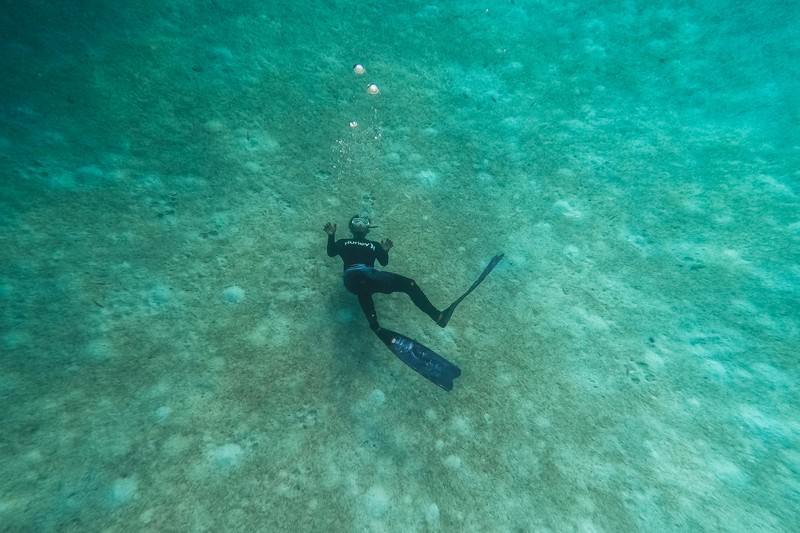
On descent, don’t kick hard. Use your weight belt and the natural compression of your wetsuit to drop. If you’re kicking, you’re wasting oxygen. I see divers thrash their fins on the way down, and by the time they reach 10 meters, their heart rate is already climbing. Instead, stay vertical, arms at your sides or stretched slightly forward, and glide.
On the bottom, keep your movements smooth. A hard, choppy kick burns twice as much oxygen as a long, gliding stroke. Think of your fins as wings. Each kick should be deliberate, not rushed. When I’m hunting, I take one or two kicks, then drift for a few seconds. This rhythm keeps my heart rate steady.
On ascent, maintain a relaxed profile. Don’t squeeze your arms against your body. Keep them loose, and let your fins do the work. Tensing your shoulders or hands on the way up is a common mistake. It spikes your heart rate when you’re already low on oxygen. For a more efficient kick, consider long-blade freediving fins that reduce effort.
The Role of Equipment in Heart Rate Management
Your gear choices directly affect how easy it is to keep your heart rate low. Bad equipment adds stress, which raises your heart rate.
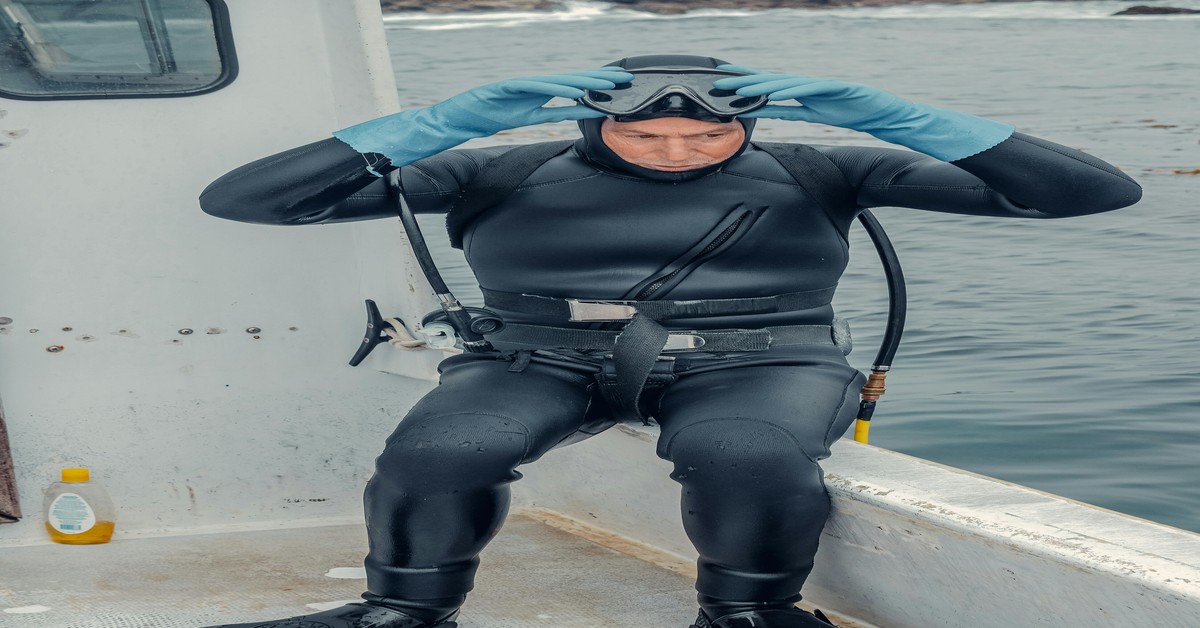
A well-fitted wetsuit is the first priority. If it’s too thin, you’ll be cold, and thermogenesis will keep your heart rate elevated. If it’s too tight, it restricts breathing and movement. I use a high-end freediving wetsuit that’s custom-cut. It adds a layer of comfort that directly helps my heart rate.
A balanced gun and weight belt are essential. If you’re fighting buoyancy, you’re wasting energy. I’ve used an unbalanced setup where I had to kick constantly to stay down. My heart rate shot up. Now I use enough weight to sink slowly, and my gun is neutrally buoyant. That eliminates one source of constant tension.
A comfortable mouthpiece is underrated. If it hurts your jaw, you’ll clench. Clenching raises tension in your whole body. A good silicone mouthpiece fits without effort.
For your mask, a low-volume model like the Mares X-Stream is worth considering. It reduces the amount of air you need to equalize, which means less movement and less distraction.
Finally, a dive computer with a heart rate monitor, like the Garmin Descent Mk3, gives you real-time feedback. It’s not necessary for everyone, but if you’re serious about tracking your improvement, it’s a useful tool.
Common Mistakes That Spike Your Heart Rate (And How to Fix Them)
Here are six mistakes I see regularly, with practical fixes.
1. Over-breathing before a dive. Fix: Stick to slow, shallow breaths. Three easy breaths before your final inhale is enough.
2. Kicking too hard on descent. Fix: Use your weight. Let gravity do the work. A gentle fin flick is all you need.
3. Holding tension in your jaw, shoulders, or hands. Fix: Consciously relax each part before you dive. A relaxed jaw is a relaxed body.
4. Watching your depth gauge obsessively. Fix: Look at the reef, not the numbers. The gauge tells you depth, but staring at it creates anxiety. Check it once during descent, then ignore it.
5. Surfacing too fast, triggering the mammalian dive reflex in reverse. Fix: Ascend at a moderate pace. Shooting up from 15 meters to the surface raises your heart rate and decreases dive efficiency. A controlled ascent keeps your heart rate from spiking.
6. Skipping recovery breaths between dives. Fix: Spend at least 20 seconds on the surface breathing slowly before going down again. Rushing the recovery leads to a cumulative increase in heart rate across a session.
Each fix is simple. It’s the discipline of doing them every time that matters.
Should You Use a Heart Rate Monitor While Diving?
A heart rate monitor is a tool, not a crutch. There are pros and cons.
Pros: Real-time feedback lets you see when your heart rate spikes and adjust your technique. Over a few sessions, you’ll notice patterns—maybe you relax after a certain breathing pattern, or you spike when you see a particular fish. It helps with safety, too. If your heart rate stays high after a dive, you know you need more recovery. For data-driven divers, it’s a standout.
Cons: It’s another piece of gear to manage, and it can be distracting. Beginners often get obsessed with the numbers instead of focusing on the feel of the dive. It’s also an expense, typically adding $200–$500 to a dive computer purchase.
Who should use it? Divers who have their basics down and want to fine-tune their performance. Also useful for anyone returning from a cardiac issue who wants to monitor exertion underwater.
Who should skip? Beginners. Master the breathing and relaxation first. The numbers will come later.
If you’re interested, the Garmin Descent Mk3i is a reliable option for a dive computer with heart rate monitoring.
Recovery Between Dives: Bringing Your Heart Rate Back Down
Recovery is where most divers lose the plot. They’re back on the surface, gasping, take 10 seconds, grab a couple deep breaths, and duck down again. That leads to a cumulative increase in heart rate, worse recovery on each dive, and shorter total session time.
Here’s a simple recovery protocol. After surfacing, take three big breaths, then switch to slow, controlled breathing like the 4-in, 6-out pattern. While you do this, stay horizontal on the surface. This reduces hydrostatic pressure on the chest, allowing easier breathing. Use your float line or dive buoy to support your weight. Don’t tread water.
Aim for 30 to 60 seconds between dives at shallow depths. For deeper dives (15 meters or more), extend recovery to 2 minutes. Use your dive computer’s surface interval timer as a reminder. If I try to rush, my heart rate stays elevated, and the next dive feels harder than it should.
Skipping recovery is the fastest way to end a session early. Don’t do it.

Real-World Dive Session Plan: From Shore to Deep Water
Here’s a dive session outline I’ve used many times. It’s designed to keep your heart rate low and your quality high.
Phase 1: Arrival and gear setup (10 minutes). Move slowly. Don’t rush to get in the water. Lay out your gear, check everything, and take a few minutes to breathe before you suit up.
Phase 2: Warm-up dives in shallow water (3–5 dives, no hunting). Go to 5–8 meters. Equalize slowly. Focus on relaxation. These dives aren’t about catching fish. They’re about getting your body in the rhythm. Keep heart rate low. If it spikes, do an extra recovery dive.
Phase 3: Active hunting dives. This is where you target your intended depth. Keep the same relaxed technique. Use your weight to descend. Glide. If you feel tension, abort and surface.
Phase 4: Recovery and mindfulness between dives. Use the 30-second recovery protocol. Stay horizontal. Reset mentally.
Phase 5: End your session with 5 minutes of passive floating. Don’t just climb out. Float on your back, hands on your stomach, and breathe slowly for a few minutes. This lowers your heart rate back to baseline and helps avoid post-dive fatigue.
Quality matters more than number of dives. A session of 10 good, relaxed dives is worth 30 rushed ones.
Considerations for Cold Water and Deep Dives
Cold water raises your heart rate. Your body needs to thermoregulate, and that process burns oxygen. A wetsuit that’s 5mm or thicker helps, but you also need a hood. A hood prevents heat loss from the head, which is a major source of thermal shock.
Before entering cold water, do a few minutes of gentle movement to warm your muscles, but nothing that raises your heart rate. If you’re cold, do an extra warm-up dive in shallow water to let your body adjust.
For deep dives (over 15 meters), the need for relaxation increases. The pressure compresses your lungs and increases the effort of equalization. My heart rate tends to rise slightly at depth no matter what, but relaxation controls the spike. I also allow longer recovery between deep dives, up to 2 minutes, because nitrogen loading adds a cumulative stress.
Don’t push hard in cold water. If you’re shivering, end the session. It’s not worth the risk. A thick freediving wetsuit with a hood can make a significant difference in cold conditions.
Ready to Apply These Techniques?
Controlling your heart rate is the foundation of longer, safer dives. It’s not a quick fix; it’s a skill you build. Start by practicing in calm water, away from pressure to catch fish. Use the breathing routines, the mental breaks, and the recovery protocols until they become automatic. The results will show in your bottom time and your comfort underwater.
If you’re looking for gear that supports heart rate management—dive computers with HR monitors, freediving fins, or low-volume masks—it’s equipment that actually helps, not stuff that’s just marketed as technical.
Ready to take control of your dives? Check out our breath-hold training guide for drills that complement heart rate management, or browse dive computers with heart rate tracking to monitor your progress underwater.