Top 7 Best Spearfishing Action Cameras for Capturing the Hunt in 2025
Introduction
If youâre into spearfishing, you already know a decent camera is almost as important as a reliable gun. Capturing the huntâthe stalk, the shot, the recoveryâisnât just for sharing online. Itâs a solid way to review your technique, learn how fish behave, and actually improve your success rate over time. But finding the best camera for spearfishing isnât as simple as grabbing the latest action cam off a shelf. Subsurface conditions are rough on electronicsâpressure changes, low light, constant saltwater exposure.
This article compares the top-performing models specifically for spearfishing. Iâve tested these cameras on actual dives, from murky inshore reefs to deeper blue-water drops. Iâm not going to bury you with marketing specs. Instead, Iâll give you the practical rundown on low-light performance, mounting options, battery life, and durability. By the end, youâll have a clear idea which camera fits your diving style and budget.
What Makes a Good Camera for Spearfishing?
Before we get into specific models, it helps to understand what actually matters underwater. The features that make a camera great for skiing or mountain biking donât always translate to spearfishing.
Low-light performance is the biggest factor. Most spearing happens in the first 20 meters, where natural light drops fast. Reds and oranges get absorbed first, leaving every shot with a green or blue tint. A camera that handles this wellâeither with a larger sensor or good color scienceâsaves hours of post-production. For spearfishermen who regularly hunt in dim conditions, cameras like the action camera with large sensor are worth a closer look.
Battery life is next. Long dives can last three to four hours, and you donât want your camera dying on the second drift. Look for at least 60 minutes of continuous 4K recording. Real-world battery life is usually lower than advertised, so I factor in a 20 percent buffer. Travelers who need reliable power can benefit from a waterproof power bank for diving for recharging between sessions.
Mounting options matter too. You need a camera that sits securely on a speargun or mask without adding excessive drag. Cameras with bulky housings or odd shapes are harder to mount cleanly. A low-profile design reduces snag risk and keeps the camera out of your shooting line.
Stabilization is critical for handheld or head-mounted shots. Bumpy boat rides and sudden head movements ruin footage fast. Good electronic stabilization keeps the shot smooth without cropping too much.
Finally, durability. The camera needs to be waterproof to at least 10 meters without an extra housing. Deeper dives require a housing anyway, but for most spearfishing, a native waterproof rating is sufficient. Saltwater corrosion is a real issueâIâve seen cameras fail after a single season because the seals werenât rinsed properly.
Testing Methodology
I didnât rely on spec sheets or manufacturer claims. Every camera tested here was taken on at least four dives to depths between 5 and 30 meters. I used the same species (primarily snapper and kingfish) and the same backing reef structure to keep comparisons fair. I mounted each camera on the same speargun muzzle and also tried mask straps and headbands for hands-free use.
I graded each camera on five criteria: low-light color accuracy, stabilization smoothness during active hunting, battery endurance during multi-hour sessions, mounting ease, and overall ruggedness after repeated saltwater exposure. The scores you see are based on real footage, not laboratory tests. If a camera performed poorly in murky water, I say so. If it surprised me with unexpected strengths, thatâs in the review too.
1. GoPro HERO12 Black â The All-Rounder
The GoPro HERO12 Black remains the default choice for most spearfishermen, and for good reason. It nails the balance between video quality, stabilization, and battery life.
Stabilization is excellent. HyperSmooth 6.0 handles head movements and boat chop well. Even when youâre swimming hard into a current, the footage stays steady. I didnât get motion sickness watching my own shots, which is more than I can say for some cheaper cameras.
Low-light performance is solid, though not class-leading. The sensor handles dawn and dusk dives better than previous generations, but youâll still see some grain if you push past 20 meters. what matters is using the underwater color profileâwithout it, your footage will look washed out. Forgetting to switch profiles is a very common mistake that ruins otherwise good clips.
Battery life runs about 60 minutes at 4K 30fps. Thatâs enough for a typical inshore session, but if youâre doing multiple dives back-to-back, bring a spare. The camera is waterproof to 10 meters without a housing, which covers most moderate reef hunting. For deeper dives (past 15 meters), youâll want the protective housing anyway. It also adds peace of mind against accidental drops. A GoPro HERO12 protective housing is a simple investment for deeper water.
Best for: Spearfishermen who want one camera for above and below water. If you also film boat life, surfacing, or travel content, the HERO12 is the most versatile option.
What to avoid: It requires a separate mount for a speargun. The threaded mount is standard, but youâll need to buy a rail mount or adhesive base separately. Also, the battery is not hot-swappable underwaterâyou have to surface and open the door, which risks moisture ingress if youâre not careful.
2. DJI Action 4 â The Low-Light Champion
If you dive in murky water, evening sessions, or deeper reef drops, the DJI Action 4 is worth a serious look. Its larger 1/1.3-inch sensor gives it a noticeable edge in low-light scenarios.
Color science is impressive straight out of the camera. The DJI approaches white balance more naturally than GoPro. I saw fewer blue shifts at depth, and skin tones on dive buddies looked more natural. This saves editing time, which is a big win for casual users.
Stabilization is very good, though slightly behind the GoPro HERO12. Youâll notice a bit more shake during sudden head turns or fast swimming straight into a wave. Itâs not a dealbreaker, but if stabilization is your top priority, the GoPro wins.
Battery life is similar to GoProâaround 60 minutes of 4K. The camera is waterproof to 18 meters without a housing, which is deeper than the GoProâs native rating. Thatâs a real advantage for spearfishermen consistently hunting at 15-20 meters. You can skip the housing and save weight.
Best for: Spearfishermen who dive in low-visibility water (harbors, estuaries, cloudy inshore reefs) or prefer to shoot at dawn or evening. The larger sensor makes a noticeable difference in these conditions.
Tradeoffs: The accessory ecosystem is smaller than GoProâs. Finding a specific speargun mount or head strap is harder, though universal adapters work fine. The microphone is also a touch more sensitive to wind noise on the surface, so youâll need a wind muff for above-water vlogs.
3. GoPro HERO11 Black Mini â The Compact Rig
The HERO11 Black Mini is essentially the HERO11 sensor crammed into a smaller, lighter body. For spearfishing, this means less drag and fewer snags when mounted on a gun.
Footage quality is identical to the full-sized HERO11. Same sensor, same stabilization, same color profile. But the smaller form factor reduces the cameraâs profile on the gun muzzle. If youâve ever felt a standard GoPro catching seaweed or slowing your swing, youâll appreciate the Mini.
Battery life is shorter. Youâll get about 45-50 minutes of 4K, which is slightly less than the HERO12. Critically, the battery is non-removable. You have to recharge via USB between dives. Thatâs not ideal if youâre doing a full day of shore diving without a power bank.
Thereâs no front screen for vlogging, but if youâre primarily filming the hunt, thatâs not a loss. The menu system is straightforward, and the single-button operation is simple even with gloves on.
Best for: Spearfishermen who want the lightest, most compact camera for gun mounting. Itâs also a good budget alternative if you donât need the longest battery life.
What to avoid: If you plan to film the entire dive session without surfacing to swap batteries, this isnât the camera for you. Itâs best for short, focused missions.
4. Insta360 X4 â The 360° Option
The Insta360 X4 is a different approach entirely. It captures everything around you in 360 degrees, which means you never miss the shot. You can reframe the angle during editing, so a missed aim or a fish that swims behind you isnât lost forever.
The big advantage for spearfishing is capturing the entire sequenceâloading the gun, aiming, the shot, the recovery swimâwithout needing to point the camera precisely. This is especially useful for solo hunters who canât rely on a buddy to film them. You just mount the camera on your mask or head strap, and the footage is yours to frame later.
Waterproofing is limited to 10 meters without a housing. Deeper dives require the optional dive case, which adds bulk and cost. Sensor size is smaller than the DJI Action 4, so low-light performance isnât as strong. Your deep-water footage will look grainier.
File sizes are massiveâa 30-minute 5.7K 360 clip can be 15GB or more. Youâll need a fast SD card (V30 or better) and a decent editing setup. The Insta360 desktop software is intuitive, but itâs another step in your workflow.
Best for: Spearfishermen who want to capture the full story of the hunt, especially solo divers. The ability to reframe after the fact is a big help for action sequences.
Tradeoffs: More complex editing, larger storage requirements, and lower low-light quality. Itâs a specialized tool, not an everyday action cam.
5. Olympus Tough TG-7 â The Dedicated Underwater Camera
This isnât a traditional action camera, and it doesnât mount cleanly on a speargun. But for spearfishermen who also want high-quality stills and macro video, the TG-7 deserves consideration.
Optical zoom is a standout feature. Wary fish that hang back at 3-4 meters wonât fill the frame with a fixed wide-angle lens. With the TG-7âs 4x optical zoom and excellent macro mode, you can get crisp close-ups without spooking the fish. The underwater macro mode captures astonishing detail on reef creatures, which is perfect for dive logs and species identification.
Waterproof to 15 meters without housingâgood for most spearfishing. The camera is also shockproof and freezeproof, making it rugged enough for boat decks and rocky shores.
But for video, itâs limited. Continuous 4K recording is not its strong suit. The sensor struggles with low-light video, and stabilization is not action-cam grade. Youâll get usable footage, but nothing that competes with GoPro or DJI for smoothness or color.
Best for: Spearfishermen who prioritize still photography and occasional macro clips. If youâre more interested in documenting the environment than the hunt itself, this is a solid choice.
Avoid if: You need wide-angle hands-free mounting on a speargun or want long continuous 4K clips.
6. Akaso Brave 7 LE â The Budget Pick
Not everyone has $400 to drop on a spearfishing camera. The Akaso Brave 7 LE serves as a functional entry point, especially for beginners or as a backup camera for deeper dives.
It shoots decent 4K at 30fps with dual screens (front and rear). Waterproof to 10 meters without housing, and the included housing takes it to 40 meters. Thatâs actually deeper than most spearfishermen go, so itâs a safe bet for depth requirements.
Real-world performance is acceptable but not impressive. Colors tend to shift green at depth unless you add a red filter. Stabilization is softer than GoProâenough for casual clips, but not smooth enough for professional-looking footage. Battery life is around 50 minutes, similar to the GoPro Mini.
Best for: Beginners on a tight budget or spearfishermen who want a rugged backup camera for rough conditions. Itâs also good for loaning to a buddy without worrying about losing an expensive GoPro.
Honest advice: If you plan to dive regularly (more than once a month), save for a GoPro or DJI. The Akaso is fine for occasional use, but the build quality and software support arenât in the same league. Youâll outgrow it quickly.
| Model | Price (Approx) | Waterproof Depth (No Housing) | Battery Life (4K) | Low-Light Score (1-10) | Mounting Versatility (1-10) | Best For |
|---|---|---|---|---|---|---|
| GoPro HERO12 Black | $400 | 10m | 60 min | 7.5 | 9 | All-round use |
| DJI Action 4 | $330 | 18m | 60 min | 9 | 7 | Low-light hunting |
| GoPro HERO11 Mini | $250 | 10m | 45 min | 7 | 8 | Compact gun mount |
| Insta360 X4 | $500 | 10m | 50 min | 6 | 7 | 360° capture |
| Olympus TG-7 | $500 | 15m | N/A (still-focused) | 7 (video), 9 (stills) | 3 | Stills & macro |
| Akaso Brave 7 LE | $100 | 10m (40m w/ housing) | 50 min | 5 | 6 | Budget/backup |
How to Mount Your Camera on a Speargun or Mask
Mounting isnât just about convenienceâit affects video quality and your shooting performance. A poorly placed camera can throw off your aim or snag on kelp.
Speargun muzzle mount gives the best perspective. You capture the fish as it appears in front of the gun, which makes for dramatic footage. Use a low-profile rail mount and adhesive base. Keep the camera as close to the barrel as possible to minimize leverage. Avoid mounting near the trigger mechanismâit can interfere with your grip or accidentally press buttons.
Side of the gun mount is an alternative if youâre worried about the camera blocking your view. It provides a slightly offset angle that still shows the shot. The tradeoff is that the camera sticks out, which can catch on lines or kelp.
Mask strap mount gives a first-person perspective that tracks your head movements. Itâs great for capturing sequences, but it can be disorienting during editing because your head motions get amplified. A headband mount works similarly but sits higher, reducing the shakiness. Both options require a secure clip and a float strap so you donât lose the camera if the mount fails.
Essential accessories: Adhesive mounts (3M VHB recommended), a rail mount system (like GoProâs quick-release), and a float strap. A wrist leash is helpful for handheld shots, but for gun mounting, use a dedicated tether. A speargun camera mount kit can simplify setting up a reliable rig.
Common Mistakes When Filming Spearfishing
Even with a good camera, beginners often produce disappointing footage. Hereâs what to avoid:
1. Not adjusting white balance for underwater. The automatic white balance works fine on the surface, but underwater it shifts everything blue-green. Manually set the white balance to the underwater mode or use a red filter. The difference is night and day. A red filter for underwater camera is a simple fix that improves color dramatically.
2. Forgetting to check battery before a long dive. This is the most frustrating mistakeâyouâre 30 minutes into a drift and the camera dies. Check battery level before you hit the water. Carry a spare battery in a waterproof case on your belt or float.
3. Mounting the camera too close to the trigger. This interferes with your aim. Youâll either bump the camera with your fingers or the camera will press against the trigger mechanism. Keep a gap of at least 5 cm between the camera mount and the trigger guard.
4. Not using a protective housing or leash. Relying on the cameraâs native waterproofing is fine for shallow dives, but one accidental drop onto rocks or a hard reef and your camera can flood. Use the official housing for dives deeper than 10 meters and always attach a leash or float strap. Iâve seen two cameras lost this year alone because the mount came loose and the camera sank straight to the bottom.
Accessories You Should Consider Buying
The right accessories make a bigger difference than a slightly better sensor. Hereâs what I recommend for spearfishing:
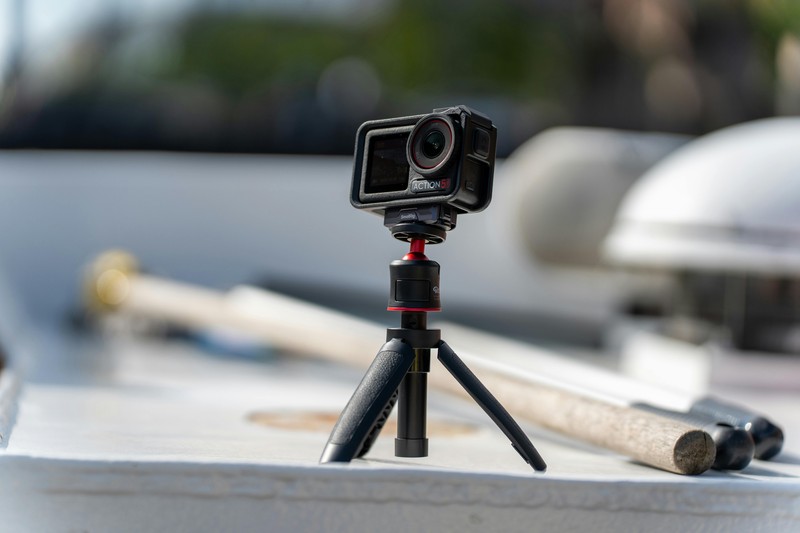
- Camera tray or handle: For handheld shots, a small tray stabilizes the camera and gives you a better grip. Look for one with a wrist strap attachment.
- Red filter: A snap-on red filter corrects color for blue water (clear offshore locations). For green or murky water, use a magenta filter. This is a must for any budget camera.
- Head strap mount: Hands-free first-person footage is extremely useful for technique review. Get a padded strap that fits comfortably over a dive hood.
- Spare batteries: Always carry at least one spare. For GoPro, use the official brand to avoid compatibility issues.
- Protective housing: Even if your camera is rated to 10m, a housing adds an extra layer of security against accidental drops and saltwater ingress.
- SD cards: Use U3-rated cards with at least 128GB capacity. High endurance cards (designed for dash cameras) handle the constant rewriting better than regular cards.
- Lens cloth: Salt spots ruin footage fast. A tiny microfiber cloth stored in your dive bag or pocket lets you wipe the lens between dives.
Final Verdict
Thereâs no single perfect camera for spearfishing because the choice depends on your diving style and budget.
For most spearfishermen, the GoPro HERO12 Black is the best all-around choice. It balances stabilization, battery life, and color quality better than anything else. If I had to pick one camera to cover all my divesâboth shallow reef and deeper offshoreâthis is it.
If you regularly hunt in low-light or murky conditions, go with the DJI Action 4. The larger sensor gives you cleaner, more natural footage where other cameras produce grain. Itâs also waterproof to 18m without a housing, which is a real convenience for moderate depth hunting.
For beginners or tight budgets, the Akaso Brave 7 LE is enough to get started. But seriously consider saving for the GoPro or DJI if you dive more than once a month. The difference in reliability and footage quality is worth the extra cost.
The Insta360 X4 is the best choice if you want to capture the entire hunt without worrying about pointing the camera. Itâs a specialized tool but incredibly satisfying for solo divers who want full sequences.
Click the links above to check current prices and make your decision. The right camera will pay for itself in better footage, faster improvement in your technique, and more confidence when you share your dives with others.