Cold Water vs Warm Water Spearfishing: Key Differences – A Complete Guide
Introduction
The biggest choice you make as a spearfisher isn’t about which gun to buy or what brand of fins to get. It’s about the water you plan to dive in. Cold water and warm water environments are almost like different sports. This guide walks through the real differences — gear, techniques, safety, and planning — so you know what you’re signing up for before spending money on gear or booking travel.
I’ve hunted in water from 38°F Norwegian fjords to 85°F tropical reefs — the differences go far beyond wetsuit thickness.
Each environment has clear tradeoffs. Cold water often means bigger, more solitary fish that hold tight to structure. But you pay for it in thick wetsuits, more physical effort, and careful trip planning. Warm water gives you longer dives, more species variety, and easier logistics. But you deal with dehydration, sun exposure, and different marine life hazards. Neither is better — they just demand different preparation. This article lays out an honest comparison so you can match your choice to your goals.
Why Water Temperature Matters for Spearfishing
Water temperature changes more than just comfort. It affects your body’s performance, your dive limits, and safety. In cold water, your body works to stay warm. Blood vessels in your arms and legs constrict to keep heat around your core. This means less circulation to your limbs, making movements stiffer. Your breath-hold suffers too — the cold triggers a gasp reflex and speeds up your metabolism, burning oxygen faster.
Cold water also takes more energy. You burn extra calories just staying warm, which means you fatigue quicker and get less bottom time per dive. This changes how you plan an entire day — shorter dives, longer surface intervals, more frequent breaks.
Warm water has its own issues. Dehydration is a real problem, especially in the tropics where you sweat even while floating. Sun exposure wears you down and can cause heat exhaustion if you’re not careful. The main challenge is managing energy over longer dives without overheating. The upside is that warm water lets you dive longer and more freely because your body isn’t fighting the cold. The tradeoff is you have to be disciplined about hydration and aware of your surroundings.
Essential Gear: Cold Water vs. Warm Water Setups
The single biggest gear difference is your exposure suit. Everything else follows from that choice. Here’s what you actually need for each.
Cold Water Essentials
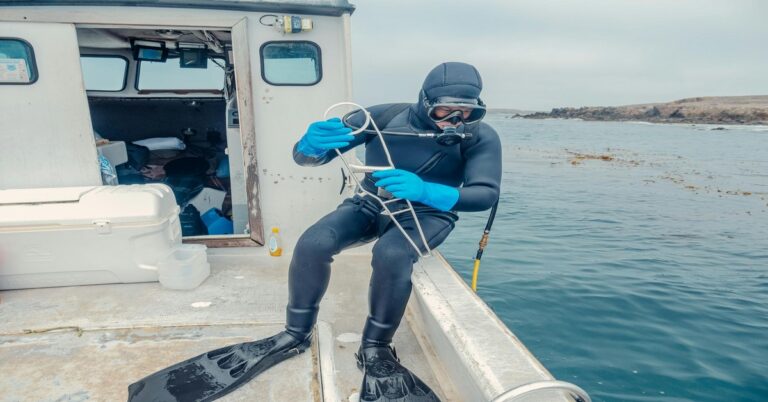
If you’re diving in water below 15°C (60°F), you need a thick wetsuit. Most experienced cold water divers use a 7mm to 9mm suit. At this thickness, you’re looking at open-cell neoprene, which insulates better but requires lubrication (water and a bit of shampoo or specific lube) to get into. Open-cell suits are warmer and more flexible than closed-cell ones, but they’re more delicate. You have to handle them with care and store them out of sunlight.
You’ll also need a hood (5mm to 7mm), gloves (5mm to 7mm), and boots (3mm to 5mm). Your fins need to be stiff enough to push through thick neoprene and heavy weights. Most cold water divers use full footpocket fins rather than open-heel because they work better with thick boots. A weighted belt is essential. Expect to carry 4 to 8 kg (9 to 18 pounds) of weight to offset the buoyancy of thick neoprene.
Brands like Omer, Cressi, and Mares all make reliable cold water gear. Don’t cheap out on the wetsuit. A well-fitting 7mm open-cell suit from a solid manufacturer is the best investment you can make for cold water spearfishing. Divers building a complete setup can browse cold water spearfishing gear to see current options.
Warm Water Essentials
Warm water setups are simpler. For water above 25°C (77°F), a 1.5mm to 3mm wetsuit is usually enough. Many tropical divers use a rash guard or thin lycra suit for sun protection and minor scrapes. You don’t need gloves or boots unless you’re diving rocky shorelines or coral. Your fins can be lighter — carbon fiber or fiberglass with a light footpocket is ideal for long warm water days.
Weighting is minimal. Most warm water divers need 1 to 2 kg (2 to 5 pounds) of weight, if any. Without thick neoprene, you’re naturally less buoyant, so you can dive lighter and move more freely. This setup travels easier too — your whole kit can fit in a carry-on plus a small checked bag.
A practical note: invest in a high-quality open-cell wetsuit if you regularly dive below 15°C (60°F). For occasional trips, a good 7mm closed-cell suit works, but it won’t be as warm or flexible.
Wetsuit Thickness and Material: What Works Best Where
Choosing a wetsuit is one of the most expensive and consequential decisions you’ll make as a spearfisher. The wrong thickness or material can ruin a trip and put you at risk. Here’s what you need to know.
Cold Water (Below 15°C / 60°F): You want an open-cell neoprene suit in the 7mm to 9mm range. Open-cell uses a smooth, porous inner surface that sticks to your skin, creating a tight seal that stops water from circulating inside the suit. That’s how you stay warm. The downside is you need lubrication to get into it, and it takes longer to put on and take off. Closed-cell suits (like surfers use) are less warm and less flexible but easier to get into and more durable. For cold water spearfishing, open-cell is standard for good reason — it keeps you warm at depth.
Cool Water (15°C to 20°C / 60°F to 68°F): A 5mm open-cell suit is usually enough. Some divers use a 3mm suit with a 5mm vest and hood combo for flexibility. This temperature range gives you options — you can go slightly lighter for mobility or thicker for comfort, depending on your cold tolerance.
Warm Water (Above 20°C / 68°F): A 1.5mm to 3mm wetsuit is all you need. Smoothskin works fine here because you don’t need the insulation of open-cell. Many divers prefer a 2mm suit or just a rash guard and shorts. Your suit’s main job in warm water is sun protection and abrasion resistance, not warmth.
The most common mistake new cold water divers make is buying a suit that’s too thin. If you’re diving in 12°C water with a 5mm suit, you’ll be cold within 20 minutes, and that’s dangerous. Check a water temperature chart for your region and buy one thickness category thicker than you think you need. It’s much easier to flush cold water out of a thick suit than to warm up in a thin one.
Diving Techniques: How Cold and Warm Water Change Your Approach
The way you move underwater is fundamentally different in cold versus warm water. In cold water, every movement costs more energy. Your muscles are tighter, range of motion is restricted by thick neoprene, and fine motor skills degrade as your hands get cold. As a result, cold water diving is slow, deliberate, and efficient. You use heavier weights to stay down, and you rely on currents and bottom structure to position yourself rather than swimming actively. Dive times are shorter — 60 to 90 seconds is typical — because your body is working harder just to stay warm.
Equalization can be more challenging in cold water. The cold can constrict your eustachian tubes, making it harder to equalize your ears. This means descending more slowly and using gentle equalization techniques. Rushing a descent in cold water is a good way to end a dive early with ear pain.
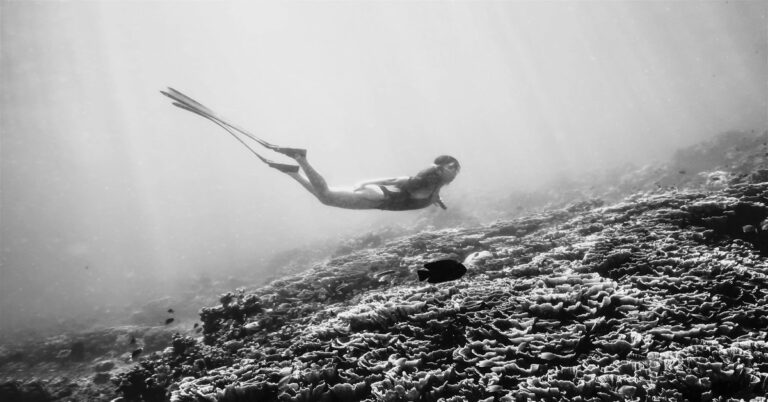
In warm water, you can be much more agile. Your range of motion is unrestricted, your hands are warm and functional, and you can stay down for 2 to 3 minutes or longer if you’re fit and relaxed. The main technique challenge in warm water is covering ground efficiently. Good finning technique is key to searching larger areas without burning oxygen. Most warm water diving is done by cruising along reefs or over sandy bottoms, scanning for movement. The lack of thermal stress lets you stay more relaxed, which directly improves your breath-hold.
One specific pointer for warm water: pay attention to your buoyancy. With thin neoprene, your buoyancy changes very little with depth, so you need to fine-tune your weighting to avoid fighting to stay down or getting pushed to the surface. A small weight belt or a few lead weights on your gun is often all you need.
Target Species: What You’ll Hunt in Each Environment
The species you hunt drives not only your dive plan but also your gear selection. Here’s a realistic look at what to expect.
Cold Water Species: Cold water environments — the Pacific Northwest, North Atlantic, and Mediterranean — offer bottom-oriented fish that hold tight to structure. Common targets include lingcod, halibut, rockfish, cabezon, and some regions have Chinook salmon. These fish tend to be larger, slower, and easier to approach because they’re less pressured by spearos in cold climates. But they’re typically found near rocky bottoms, kelp forests, or ledges, which require careful navigation and good awareness. Heavy bottomfish like lingcod and halibut need good shot placement and a well-tuned gun with a single flopper tip. A 75cm to 90cm railgun or a 90cm to 110cm pneumatic is ideal for these environments.
Warm Water Species: Warm water environments — the Caribbean, Gulf of Mexico, and Indo-Pacific — offer much wider diversity. You’ll find reef fish like grouper, snapper, hogfish, and parrotfish, plus pelagics like wahoo, mahi-mahi, and tuna. Reef fish are often near coral heads, ledges, and drop-offs, while pelagics are more dispersed and require covering more ground. Pelagics demand a longer gun — 110cm to 130cm is common — because they’re faster and more wary. Reef fish can be taken with a 75cm to 90cm gun, though a longer gun gives you more reach on wary fish. The variety means you might want multiple guns or at least a gun with interchangeable bands for different targets.
Understanding your local species is critical. A gun that works well for lingcod in cold water may be entirely wrong for wahoo in tropical blue water.
Safety Considerations: Hypothermia, Overheating, and Hazards
Safety in spearfishing depends on knowing the specific risks of your environment. Cold and warm water present very different threats.
Cold Water Risks: Hypothermia is the primary concern. Even with a good wetsuit, you’re losing heat continuously. Symptoms include shivering, loss of coordination, confusion, and eventually loss of consciousness. The best prevention is a properly fitted, thick wetsuit with no gaps. Monitor your surface time — every 20 to 30 minutes, take a break to warm up. Cold reduces grip strength, making handling your gun and knife more difficult. Calf cramps are common in cold water because your muscles are tense from the cold. Stretch before getting in and stay hydrated. Always dive with a buddy and carry a dive knife or line cutter in case you get tangled in kelp or fishing line.
Warm Water Risks: Dehydration and heat exhaustion are the main risks. You lose fluids through sweating even while submerged, and it’s easy to not notice until you feel lightheaded or cramp. Drink water before and during your dive — aim for 500ml to 1 liter per hour of activity. Sunburn is another real hazard, especially on exposed skin. A rash guard or thin wetsuit with a hood is better than sunscreen in the water. Marine life hazards include jellyfish stings, sea urchin punctures, and encounters with sharks. Most sharks are not a threat while spearfishing, but always keep your stringer behind you and avoid spearing fish near a feeding event. Carry a small first aid kit with antiseptic, bandages, and tweezers for urchin spines.
The universal rule is: never dive alone. Regardless of temperature, having a buddy who can call for help or manage an emergency is the single most important safety measure.
Logistics and Planning: Cold vs. Warm Water Trips
Planning a spearfishing trip requires different considerations in each environment.
Cold Water Trips: Cold water often means diving in more remote areas where conditions can change quickly. You need local knowledge of tides, currents, and wind patterns — many cold water dive sites are tide-dependent and may only be safe during specific windows. Gear logistics are heavier; a 7mm suit, weights, and a large gun case easily exceed airline weight limits. Consider renting gear at your destination if you travel frequently, but test it beforehand. Cold water trips generally require more lead time for planning because of limited dive windows and seasonal closures for species like salmon or halibut.
Warm Water Trips: Warm water diving is generally more accessible. Charters are common in tropical destinations, and you can book half-day trips easily. Gear is light and easy to travel with. However, prime seasons can be booked out months in advance, especially during the winter months when many northern divers head south. Warm water also means dealing with tropical weather — sudden storms, high heat, and strong sun. Plan for early morning dives when conditions are calmest and the sun is not at its peak. Always check local regulations for spearfishing, which vary widely by country and island.
A practical tip: if you’re traveling for a warm water trip, research the charter operators beforehand. Ask about their spearfishing experience, whether they provide float lines or safety gear, and what their policy is for keeping your catch. Good operators will be transparent about all of this.
Common Mistakes Divers Make When Switching Environments
Switching from warm water to cold water — or vice versa — comes with a steep learning curve. Here are the most frequent errors I’ve seen.
Mistake 1: Using Too Little Weight in Cold Water. Divers used to warm water often underestimate how much weight they need with a thick wetsuit. A 7mm suit can require 4 to 8 kg of lead, but many newcomers start with 2 kg and wonder why they can’t stay down. Bring extra weights and adjust in the water.
Mistake 2: Using a Thin Suit in Cold Water. This is the fastest way to end a dive trip with hypothermia. If you’re diving in water below 15°C and you have a 3mm suit, you’ll be cold within 10 minutes. Respect the temperature and buy the right gear. Those upgrading their cold water kit may want to compare 7mm spearfishing wetsuits to find a reliable option.
Mistake 3: Over-Hydrating Incorrectly in Warm Water. Drinking too much plain water without electrolytes can lead to hyponatremia (low sodium). In warm water, you lose salt through sweat, so use electrolyte tablets or a sports drink to balance fluids.
Mistake 4: Neglecting Gear Protection in Warm Climates. Saltwater is corrosive, and sun exposure degrades wetsuit neoprene fast. Rinse your gear thoroughly after each dive and store it out of direct sunlight. The same goes for your gun — rinse the mechanisms and lubricate the trigger occasionally.
Mistake 5: Ignoring Local Regulations. Many spearfishing regulations differ by region. Some areas ban spearfishing entirely, others restrict species or seasons, and some require permits. Check local laws before you travel.
Equipment Maintenance Differences
How you care for your gear depends heavily on where you dive. In cold water, the main enemy is moisture trapped inside thick neoprene. After a dive, rinse your wetsuit inside and out with fresh water, then hang it in a ventilated area away from direct sunlight. Open-cell suits need careful handling — don’t fold them sharply or leave them compressed for long periods. Lubricate the inside of the suit occasionally with conditioners designed for wetsuits. Store your hood, gloves, and boots in a mesh bag to allow air circulation.
In warm water, the primary maintenance concerns are salt and sand. Rinse your wetsuit with fresh water after every dive to prevent salt crystallization, which breaks down neoprene over time. Pay attention to zippers and seals — sand can get stuck and wear down the teeth. For your gun, flush the mech area with fresh water and dry it thoroughly. Sand can destroy mask seals and damage your regulator if you use scuba gear. A simple spray bottle with fresh water is the best tool for quick cleaning after a warm water dive.
Proper maintenance extends the life of your gear significantly. A high-quality wetsuit that is well cared for can last five years or more. A neglected one can delaminate within a single season.

Which Should You Choose? A Practical Comparison
Deciding between cold water and warm water spearfishing comes down to three factors: budget, accessibility, and personal preference.
Budget: Cold water gear costs more. A good 7mm open-cell suit ranges from $300 to $600, plus hood, gloves, boots, and extra weights. You also need a heavier gun. Warm water gear is significantly cheaper — a 2mm suit is $100 to $200, fins can be lighter and less expensive, and weight is minimal. If you’re buying a complete gear kit for both environments, expect to spend between $1,200 and $2,000 for cold water versus $600 to $1,000 for warm water.
Accessibility: Warm water offers more year-round opportunities in most regions. Cold water diving is often seasonal, with shorter windows and more variable conditions. If you live near cold water, you can dive it year-round with the right gear, but the frequency and duration of your dives may be limited.
Physical Fitness: Cold water demands more from your body. You’ll burn more calories per dive, your dive times will be shorter, and you’ll need to recover more between dives. Warm water is less physically taxing on your thermoregulation, allowing for longer, more relaxed dive sessions.
Best For:
- Cold water is best for divers who value consistent, high-quality protein and are willing to invest in gear for colder climates. It’s also ideal for divers who prefer solitude — cold water sites are often less crowded.
- Warm water is best for divers seeking extended dive times, diverse tropical species, and easier logistics. It’s also better for beginners, because the learning curve is less steep.
If you’re on the fence, try both. Rent gear for a warm water trip and see if you prefer the experience before investing in a cold water setup. Or vice versa. The only way to know for sure is to get in the water.
Final Thoughts: Matching Your Gear to Your Goals
Understanding how water temperature changes every aspect of spearfishing — from gear and technique to safety and logistics — is the foundation of becoming a competent diver in any environment. The key takeaway is simple: invest in the right gear for your primary environment and be realistic about what you need for occasional trips. Don’t compromise on your wetsuit, don’t underestimate the physical demands of cold water, and never skip safety precautions.
Whether you’re bracing the cold in a 7mm suit or diving tropical reefs in a rash guard, the right preparation makes all the difference. Compare your top gear options using the recommendations above and find the setup that works for your next dive. Your choice should match your goals, your budget, and your comfort with the environment you want to explore.
Diving different water temps? Check out our cold-water glove guide and temperature-rated wetsuits to stay comfortable no matter where you hunt.