Spearfishing in Brazil: Targeting Giant Cubera Snapper
Introduction
If you are an experienced spearfisher looking for a real challenge, few targets compare to the giant cubera snapper. And for hunting these fish at serious sizes, few places deliver like Brazil. I have been running trips and diving these waters for years. This is not a trip for beginners. This article breaks down what you need to know for spearfishing Brazil for giant cubera snapper: the real locations, the logistics, the gear that matters, the permits you cannot skip, and the tactics that actually work. This is based on first-hand experience, not rumor. If you are planning a dedicated trip and want to avoid costly mistakes, keep reading.
Why Brazil for Giant Cubera Snapper?
The Caribbean has plenty of cubera, but Brazil offers something different: consistently larger average fish in waters that are less pressured. Strong currents, nutrient-rich upwelling, and extensive reef systems create ideal growing conditions. Fish over 40 kilos are taken regularly here, and 50+ kilo fish are not rare. That is a different league than what most divers encounter in the Bahamas or Florida.
The tradeoff is real, though. Visibility is rarely the crystal-clear 30 meters you might get in the South Pacific. Twenty meters is a good day, and you will often hunt in 10-15 meters of visibility. The currents are serious, and the water temperature varies significantly depending on where and when you go. You are trading easy conditions for bigger fish. If you want a relaxing dive in warm, clear water, go to the Maldives. If you want to wrestle a 40-kilo fish out of a reef in strong current, come to Brazil.
Prime Locations: Where to Find Cubera Snapper in Brazil
Several regions are worth targeting, each with its own character.
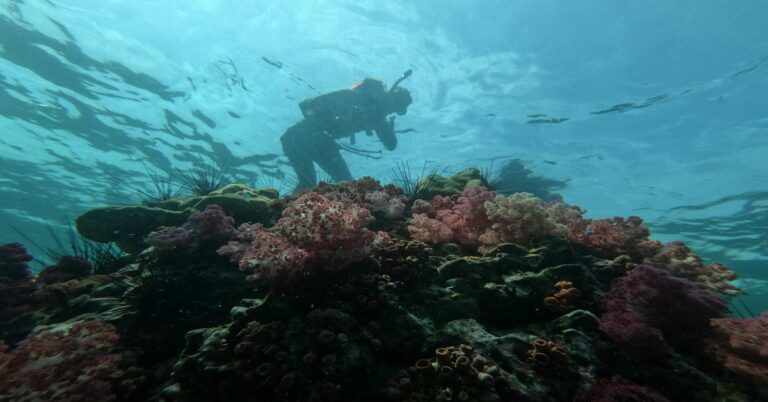
Fernando de Noronha is the most famous destination. The archipelago is a marine national park with strict regulations, but fishing outside the no-take zones can be exceptional. The water is warmer and clearer than the mainland coast. Cubera here are often found around rocky pinnacles and drop-offs in 20-35 meters of depth. The best season is August through December. Access requires a flight from Recife or Natal, and you need to book boat charters well in advance. Expect to pay a premium for accommodation and permits.
Atol das Rocas is a remote atoll about 260 kilometers northeast of Natal. This is a true expedition destination. Access is via liveaboard or private charter, and conditions are tough. Currents are relentless, and the atoll is completely exposed to the open ocean. The fish sizes here are legendary. This is not a place for anyone without significant bluewater and current experience. The best months are September to November.
The Ceará coast, particularly around the offshore banks and artificial reefs near Fortaleza, offers a more accessible option. Fishing is good year-round, with a peak from August to January. The water is warmer, visibility is moderate, and plenty of experienced local charter operators know the waters. The fish here tend to be slightly smaller on average than Fernando de Noronha, but the logistical ease makes up for it. You can fly directly into Fortaleza and be on the water the next day.
These are starting points. The exact spots change with conditions, and local knowledge is essential. Do not expect to show up and find fish on your own. Hire a reputable charter with a captain who knows the area.
Legal Requirements: Permits, Licenses, and Regulations
Brazilian bureaucracy is real, and you cannot skip the paperwork. Foreigners need a temporary fishing license, which you can obtain online through the Brazilian government’s SISCOMEX system. The process is straightforward but requires a CPF (Brazilian taxpayer ID) which you can get from the federal revenue office. Some charter operators can handle this for you, but do not rely on that. Do it yourself before you arrive.
Fernando de Noronha has additional park entry fees and specific fishing regulations. You must follow bag limits and minimum size limits for cubera snapper. These change occasionally, so check with the local environmental agency (ICMBio) before you go. The fines for non-compliance are steep, and enforcement does happen. Do not be that diver who gets your gear confiscated because you did not read the rules.
Essential Gear: What You Actually Need to Bring
Your gear needs to be rugged and reliable. Here is what matters most.
Speargun: A 130-140 cm carbon fiber railgun is the sweet spot for cubera. It provides the range and penetration you need without being too unwieldy in current. A popular choice among divers looking for reliable performance is a carbon fiber railgun. If you prefer a roller, look for a high-quality model. Do not bring a short gun; you will regret it on a 40-kilo fish holding in a cave.
Floatline and Float: This is essential. Use a heavy-duty, high-visibility floatline, at least 30 meters long. A durable spearfishing floatline is a solid choice. Your float needs to be large enough to signal your position to boat traffic. Do not skimp on this. A big cubera will pull you deep, and you need to be able to find your float after the fight.
Wetsuit: Water temperature ranges from 22°C in the south to 28°C in the north. A 3mm open-cell wetsuit is sufficient for most locations. For colder months or deeper dives in Ceará, a 5mm is better. A well-fitting spearfishing wetsuit from a reputable brand is worth the investment. Bring a suit that fits well; a loose suit will fill with water and tire you out.
Knife and Flashlight: A sturdy dive knife strapped to your calf is essential for cutting line or dealing with entanglement. A compact flashlight is useful for peering into dark holes and caves.
Most charter operators can rent basic gear, but it is often worn and not the size you want. Bring your own where possible.
Spearfishing Tactics: How to Stalk and Take Cubera Snapper
Cubera are not dumb. They are wary, often hold tight to structure, and are incredibly strong. The approach matters more than the shot.
Reading the environment: Look for areas where current hits a reef or pinnacle. Cubera use the current as a conveyor belt for food. They will hold in the lee of the structure, often in caves or under ledges. Do not swim over the top of them. Approach from down-current and use the reef as cover. Be patient. I have spent 20 minutes watching a single cave before a fish showed itself.
Shot placement: Aim for the brain, located just above and behind the eye. A body shot will result in a long, dangerous fight. A well-placed head shot with a slip-tip is instant death. If you are using a reel, make sure your drag is set properly. A cubera will run for the rocks immediately.
After the shot: Do not give it slack. Keep the line tight and let the fish tire itself out. Be prepared to chase it. On high-current days, the fish will use the current against you. Stay calm and control the ascent. A big fish in current can pull you down if you are not careful.
Common mistakes: Shooting too far is the biggest one. If you are not within 3-4 meters, do not take the shot. Cubera are tough, and a bad hit will lose the fish. Another mistake is not managing the current. On a strong current day, you will exhaust your air quickly. Adjust your dive plan. Do not push it.
Best Time to Go: Seasonal Windows for Success
For Fernando de Noronha and Atol das Rocas, the prime window is late winter through spring: August to December. Water temperature is in the low 20s to mid-20s Celsius, visibility is cleanest, and the current is manageable. Cubera feeding activity is high during this period.
For the Ceará coast, the season is broader. September to February offers consistently good conditions, with warmer water and stable weather. The shoulder months of March and April can be good but have more variable conditions.
If you can only carve out a two-week window, aim for late September to early October. This gives you a solid chance at all three locations. Avoid the rainy season from March to June in most regions; visibility drops significantly.
Travel Logistics: Flights, Accommodation, and Charters
Your entry point is likely São Paulo (GRU) or Rio de Janeiro (GIG) for international arrivals. From there, you need connecting flights. For Fernando de Noronha, fly to Recife or Natal and then connect to the island. For Ceará, fly directly into Fortaleza (FOR).
Visa: US, Canadian, and Australian citizens currently need a visa for Brazil. The process is online through the Brazilian consulate. Apply at least two months in advance. The system can be slow. Do not wait until the last minute.
Accommodation: In Fernando de Noronha, you have pousadas (small inns) and more upscale hotels. A pousada is the most practical option. It is cheaper and often has a kitchen where you can prep your catch. For the Ceará coast, beachfront pousadas in the fishing villages are the way to go. They are simple, affordable, and close to the launch points.
Charters: Book directly with operators who specialize in spearfishing. General fishing charters are rarely set up for spearfishermen. Look for operators who provide a dedicated dive boat and knowledgeable crew, and who can handle the permit paperwork. Prices vary widely, but expect to pay $500-$1,000 per day for a quality charter including guide, boat, and fuel.
Practical tips: Brazil uses a mix of cash and cards. Bring some Brazilian reais for small purchases. Credit cards are widely accepted in cities but less so on islands. The power plugs are two-pin (Type N), 127V or 220V depending on the region. Bring a universal adapter. Internet coverage is good in cities but limited in remote fishing villages. Do not count on reliable connectivity.
Common Mistakes to Avoid When Spearfishing in Brazil
Experience has taught me a few hard lessons. Here are the ones to avoid.
Underestimating the current. This is the most common error. Divers from the Caribbean or Mediterranean are not used to the sheer force of the Brazilian coast currents. You can be swept miles off course in minutes. Always dive with a current line and a safety boat. Do not try to fight it.
Skipping the permit process. I have seen divers have their gear confiscated and face heavy fines because they thought they could wing it. The Brazilian authorities do not play games. Get your fishing license and park permits before you arrive.
Poor gun maintenance. Saltwater is brutal on spearguns. Rinse your gun thoroughly with fresh water after every dive, especially the trigger mechanism and reel. Lubricate moving parts with a silicone spray. A seized trigger at depth is a bad day.
Not having a proper floatline. A cheap, thin floatline will tangle, cut your hands, and fail under the tension of a large fish. Invest in a proper heavy-duty line. Your life depends on it.
Ignoring local advice. The local guides know the reefs, the currents, and the fish. Listen to them. They will tell you when to hold back and when to push. Ego gets divers into trouble. Check your ego at the dock.
Safety Considerations: Currents, Marine Life, and Remote Diving
Safety is not theoretical in Brazil. The diving is remote, conditions are demanding, and medical access can be slow. Plan accordingly.
Currents: As mentioned, currents are the primary hazard. Always dive with a downstream plan. Have a pick-up plan with your boat. Carry a dive flag on a float to signal your position. A personal locator beacon (PLB) is cheap insurance. I carry a diving personal locator beacon in my BCD pocket.
Marine life: Sharks are present. Tiger sharks, bull sharks, and oceanic whitetips are all possible, especially around a fresh kill. They are not usually aggressive toward divers, but they are attracted to the struggle. After you shoot a fish, keep it close, make eye contact with any sharks, and move decisively to the boat. A dive knife is essential if one gets curious. Do not let fear paralyze you; most encounters are uneventful. But be prepared.
Remote diving: Atol das Rocas and some offshore banks are hours from the nearest recompression chamber. If you or a buddy has a serious decompression incident, help is far away. Dive conservatively. Use a computer. Do not push your no-deco limits. A dive accident in these locations can be catastrophic. Respect the environment.
Processing and Shipping: What to Do With Your Catch
If you are successful, you need a plan for the catch. Immediate care is critical. Bleed and gut the fish as soon as you are on the boat. Icing is essential. A cooled cooler with plenty of ice is standard on good charters.
Local processing: In Fernando de Noronha and Ceará, there are fish processing facilities that can fillet, freeze, and vacuum-pack your catch for you. This is a paid service but worth it. They know how to handle large fish properly.
Shipping or bringing fish home: Check the customs regulations of your home country. The US, for example, allows personal catches if they are properly cleaned and declared. You will need a certificate of origin for the fish. Most processing facilities can provide this. Shipping frozen fish is expensive and unreliable. The safer bet is to bring it in your checked luggage, sealed in the approved airline containers. Check with your airline for their rules. Some will allow it, some will not. Do not assume anything.
Final Recommendations: Is This Trip Right for You?
This trip is for experienced spearfishers who are comfortable with strong currents, moderate depth (20-35 meters), and the challenge of hunting wary, large fish. If you are a beginner who has only done easy reef diving, you will struggle here. The learning curve is steep, and the consequences of mistakes are higher.
If you want a more forgiving alternative, consider the Caribbean or the Gulf of Mexico. But if you want the best chance at a true 40+ kilo cubera, Brazil is the place. The fish are bigger, the diving is harder, and the reward is enormous.
Do your homework, book your charters early, and get the permits sorted. Then go. There is nothing quite like the feeling of pulling a giant cubera out of a Brazilian reef.
Ready to plan your trip? Check current rates and book your charter or stay now.