Understanding Pelagic Fish Behavior for Better Spearfishing
Introduction
For most spearfishers, moving from reef hunting to chasing pelagics feels like a different sport. And it is—but not for the reasons people usually think. The gear changes, the water gets deeper, and the fish are faster. The real difference is behavior. On the reef, you hunt fish that hide. You read structure, wait, and ambush. In blue water, there’s nowhere to hide. Pelagic fish operate in open water, driven by migration, feeding frenzies, and water temperature. If you don’t understand pelagic fish behavior spearfishing, you’re basically swimming blind. This article is for spearos who’ve spent time on the reef and want to make the transition to blue water hunting—safely, effectively, and with better results.
Why Pelagic Fish Behavior Matters for Spearfishing
When I started hunting pelagics, I made the same mistake most guys do—I treated them like reef fish that just happened to be in open water. I’d drop in, swim hard, and wonder why the school was already 200 yards away by the time I got within range. Pelagic fish live in a world without cover. Their survival depends on movement, awareness, and group coordination. A school of yellowfin doesn’t just sit there waiting for you to line up a shot. They’re constantly reading the water—current changes, pressure waves, bait activity—and react instantly.
Understanding feeding patterns changes things. If you know that wahoo are ambush predators that follow current lines, you stop aimlessly cruising and start looking for edges. If you know mahi-mahi are drawn to floating debris, you scan for logs or weed lines instead of open blue. That knowledge directly affects your approach, gear choices, and safety. I’ve seen guys burn through entire tanks chasing schools they never had a chance of reaching, simply because they didn’t read the behavior. Once you start hunting based on what the fish are actually doing, you stop reacting and start anticipating. Travelers who struggle with visibility might find a good pair of polarized sunglasses for fishing helpful when scanning for current lines in bright conditions.
Key Pelagic Species and Their Behavioral Traits
Not all pelagics act the same. The behavioral differences between species are significant. Here’s a breakdown of the most commonly targeted species and what drives them.
Yellowfin Tuna
Yellowfin are the classic blue water target. They’re constantly on the move, driven by a need to feed. They school by size—smaller fish in big packs, larger bulls in smaller, more cautious groups. Depth preference varies with light conditions. Early morning, they’ll be near the surface. By midday, they push down to 60-100 feet. Yellowfin are also responsive to water temperature; they’ll follow temperature breaks like a highway. If you’re marking consistent 75-degree water that suddenly jumps to 78, start looking. For divers who want to track these changes, a dive computer with temperature gauge is a practical investment for monitoring conditions at depth.
Wahoo
Wahoo are built for speed. They’re solitary hunters that use current lines and structure edges as ambush points. Unlike tuna, they don’t form massive schools. You’ll find them in small packs or alone. Their behavior is unpredictable—sometimes they’ll blast through a bait ball, other times they’ll hang at the edge watching. what matters is to hunt edges: where the current meets calm water, where deep blue meets green, or where a drop-off creates a feeding zone. They’re also known for appearing suddenly and disappearing just as fast.
Mahi-Mahi (Dorado)
Mahi are the most accessible pelagic for intermediate hunters. They’re drawn to anything floating: logs, pallets, weed lines, even your float line if you sit still long enough. They school in aggressive feeding packs, often with multiple fish competing for the same bait. Their behavior is predictable—they’ll crash bait on the surface and feed with reckless abandon. This makes them a good starter pelagic. But don’t underestimate them. A big bull mahi can spook if you rush the approach. Slow down, wait for the school to settle, and pick your fish.
Jack Crevalle
Jacks are the adrenaline hit of the pelagic world. They hunt in tight, aggressive schools, often herding bait against the surface. Their behavior is chaotic—they’ll hit anything that moves. But they’re also incredibly aware. A spooked jack school disperses instantly. The trick is to swim parallel to their direction of travel, not straight at the middle of the school. Jacks are strong, fast, and they’ll test your gear. If you’re not using a breakaway rig, you’ll learn why after your first big jack run.
Striped Marlin
Marlin are a different game. They’re solitary, intelligent, and they don’t school. You’ll find them by spotting their dorsal fin cutting the surface. Their behavior is driven by hunger and curiosity. A marlin might come in to investigate your presence, then disappear instantly if it senses danger. Hunting marlin requires patience and a different approach—often involving baiting or dangling from a kite. It’s not for beginners.
Reading Water Conditions and Feeding Patterns
If you want to find pelagics consistently, learn to read the water. The fish are telling you exactly where they are—you just need to know what to look for. Start with birds. Frigate birds circling high means bait is near the surface. Terns diving means feeding is active. That’s your first clue. Follow the birds and you’ll likely find bait—and where there’s bait, there are pelagics.
Current lines are another big indicator. When two different bodies of water meet, they create a visible line—sometimes a color change, sometimes a foam line. Pelagics use these edges as feeding lanes. The current concentrates bait, and the predators know it. Learn to spot these lines from the boat or while swimming.
Temperature breaks are harder to spot without gear, but they’re worth investing in. A dive watch with a built-in thermometer lets you check water temp at depth. If you’re swimming along and the temp drops two degrees suddenly, you’ve crossed into different water—and likely different fish activity. I always mark these spots on my GPS. They’re repeatable. Next week, the same spot might be hot again. A fish finder with surface temp readings is even better, but a dive computer with temperature is the budget-friendly option that works well.
How Hunting Strategy Changes with Pelagic Behavior
Once you understand what the fish are doing, your hunting strategy shifts from luck-based to informed. Years ago, I used to jump in anywhere there was a bird pile. Sometimes it worked. More often, I’d surface to find the school gone. What I didn’t realize is that pelagics feed in pulses. They’ll blast through a bait ball, then go quiet for 10-15 minutes while they digest and regroup. If you drop in during the quiet window, you’re swimming into empty water. Now I wait. I watch the birds. When they start diving frantically, that’s the signal the fish are actively feeding again.
Approaching a bait ball requires finesse. You don’t want to swim directly at the bait—that pushes the school away, and the predators follow. Instead, drop down to 30-40 feet and swim parallel to the bait’s direction. Let the fish come to you. Most pelagics will circle the bait before committing. That’s your window. Stay calm, breathe slow, and let them close the distance.
Drift hunting is different from anchored hunting. In a drift, you’re covering more water but also moving through the fish’s territory. what matters is to stay quiet in the water—no splashing, no sudden movements. Use a float line that doesn’t create drag. If you’re anchored over structure, you’re waiting for fish to come to you. That works well for larger pelagics that patrol a drop-off. Both approaches work, but your success depends on matching your strategy to the behavior you’re seeing.
Decoys have their place. A well-placed fish decoy can draw in curious pelagics, especially wahoo and mahi-mahi. But it’s not magic. You still need to be in the right area with the right water conditions. Never chase a school with a decoy—that just spooks them faster. Let the decoy sit still and let the fish decide to investigate.
Common Mistakes Hunters Make with Pelagic Fish
I’ve made almost all of these mistakes myself, so I can tell you from experience they’re avoidable.
Rushing the approach. The biggest mistake I see—and made—is dropping in and immediately kicking hard toward the school. Pelagics are hyper-aware of pressure changes. A fast-moving diver looks like a predator to them. Slow down. Swim wide. Use the current to drift into their zone. Most spooked fish don’t come back, so wait for the right moment.
Ignoring wind and current. Wind pushes surface debris, which affects where bait collects. If you’re fighting a strong current, you’ll burn energy before you even get near the fish. Plan your drops with the current, not against it. Let the water do the work.
Wrong gun setup. Using too small a shaft for tuna is a classic mistake. A tuna’s skin and muscle are dense. A thin shaft won’t penetrate deep enough to hold. I’ve seen guys lose fish because they had a 6.5mm shaft in a gun meant for reef hunting. For yellowfin over 40 pounds, you need at least a 7mm shaft, preferably 7.5mm or larger. Breakaway rigs are also essential for big pelagics—a floatline just creates too much drag. If you need to upgrade your gear, consider a speargun shaft 7mm for adequate penetration on larger fish.
Not respecting stamina. Pelagics are endurance athletes. A big tuna can make multiple 300-yard runs before tiring. Underestimating that leads to lost fish, broken gear, or worse—a diver getting pulled into dangerous depths. Always have a quick-release setup on your floatline, and never wrap the line around your hand. Respect the fish’s strength.
Essential Gear for Reading and Hunting Pelagics
Having the right gear doesn’t make you a better hunter, but it does let you capitalize on what you already know. Let’s be practical about what matters.
Dive computer with temperature gauge. This is my number one recommendation for anyone moving to pelagic hunting. Knowing the water temperature at depth tells you when you’ve crossed into a different water mass. I use a Suunto D5, but there are plenty of options. The key feature is the temp log—being able to review readings after a dive helps you map hot spots over time.
Polarized sunglasses. Not all sunglasses are equal. For spotting current lines, birds, and floating debris, you need good polarization. I use Costa Del Mar 580Gs, but even a decent pair of polarized Ray-Bans will work. The difference is clarity at distance—cheap polarized lenses distort, which matters when you’re scanning for a subtle temperature break.
GPS or fish finder. If you’re hunting from a boat, a GPS unit is essential for marking spots. A fish finder with surface temp readings and GPS integration makes location tracking easy. Even a handheld GPS like a Garmin eTrex will work for marking a few key waypoints. The goal is repeatability—find a productive spot, mark it, and come back under similar conditions.
Speargun setup. For pelagics, your gun choice matters. Roller guns are popular for their speed—they get the shaft to the fish faster, which helps with longer-range shots. But a standard rail gun with a 7mm shaft and a breakaway rig works just as well if you’re accurate. Match the gun to the fish you’re targeting. For wahoo and mahi, a 110cm gun is fine. For tuna and marlin, you’ll want 130cm or longer. Always carry a spare shaft. Beginners may want to start with a speargun roller 110cm for a good balance of speed and range.
Best Practices for Approaching Pelagic Schools
Here’s a step-by-step approach that works consistently. First, spot the school. From the boat or surface, identify their direction of travel. Most pelagics move into the current. Position yourself up-current and slightly to the side. Drop down to 20-30 feet below the surface—not right at the surface where you’ll create a silhouette.
Swim parallel to the school’s path, not directly toward them. Pelagics have excellent lateral line sensitivity. A direct approach triggers a threat response. By swimming parallel, you appear less threatening. Let the school gradually come into range. If they start to close distance on their own, stay still and let them finish the work.
Pick your target early. Don’t wait until the last second—that leads to rushed shots. Choose a fish on the edge of the school, not the center. Center-of-school shots spook the entire group and you’ll lose the rest. Edge fish are easier to hit and the school often stays together after the shot.
For smaller pelagics like mahi-mahi, a pole spear works well. It’s quieter, and you can take multiple fish from a school without spooking them. For larger species, stick with a speargun. The tradeoff is speed versus stealth—pole spears are slower but quieter; guns are faster but riskier if you miss. Know your gear and pick the right tool for the fish you’re targeting.
How Seasonal Changes Affect Pelagic Movement
Pelagics follow seasonal patterns that are predictable once you know what to look for. Water temperature is the biggest driver. In the Gulf of Mexico, yellowfin tuna are most active in late spring through early fall when water temperatures hit 75-80°F. In the Pacific, the timing shifts—summer and early fall are prime for tuna off California and Mexico.
Spawning cycles also shift behavior. Many pelagics feed heavily before spawning, then become less active during the spawn. Mahi-mahi spawn year-round in tropical waters, but peak spawning coincides with warmer months, which is also when they’re most aggressive feeding. Knowing this helps you time your trips. If you’re planning a week-long hunt, you want to hit the pre-spawn window when fish are actively feeding.
Annual migrations are a reliable pattern. Tuna move north in warmer months and south in colder months. The exact timing varies by region, but local fishing reports and water temperature data give you a solid starting point. In the Atlantic, the Gulf Stream is the highway—follow it and you’ll find fish. The table below gives a general seasonal guide for common regions, but always check local conditions before relying on it.
| Region | Best Season | Target Species |
|---|---|---|
| Gulf of Mexico | May-Oct | Yellowfin, Wahoo, Mahi |
| Pacific (California) | Jul-Oct | Yellowfin, Bluefin, Marlin |
| Pacific (Mexico) | Nov-May | Yellowfin, Wahoo, Dorado |
| Atlantic (Florida) | Apr-Sep | Mahi, Wahoo, Tuna |
Safety Considerations When Hunting Pelagics
Hunting in open water comes with risks you don’t face on the reef. The biggest is current. Pelagics often hunt in current lines, and that current can be strong. Always check conditions before you drop in. If the current is ripping, you’ll get pushed away from your boat faster than you expect. Use a drift flag or a surface marker buoy to stay visible. Never hunt alone—even experienced guys have been swept miles in a strong drift.
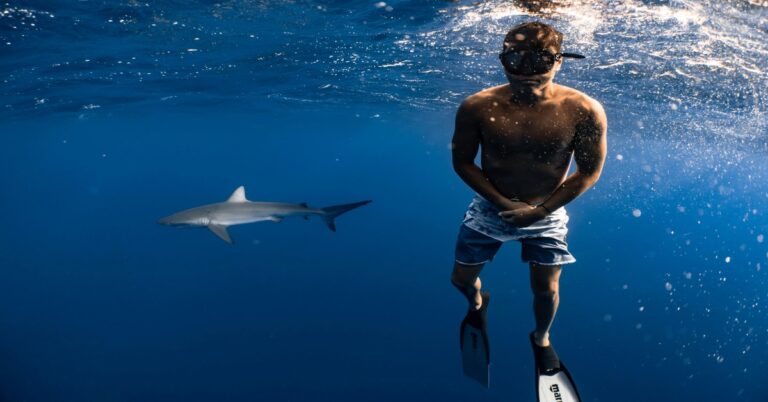
Shark encounters happen more often in blue water. Most pelagics are hunted by sharks, and when you spear a tuna, you’re suddenly trailing a bleeding fish. This attracts sharks. Carry a sharp knife accessible at all times, and know how to cut a line fast. If a shark becomes aggressive, stay calm and maintain eye contact. Don’t thrash—that triggers prey behavior. Slowly back away toward your boat or float line. Most encounters are curious, not predatory, but you need to be prepared. A dive knife titanium is worth considering for rust resistance and reliable cutting.
Aggressive fish are another concern. A wounded tuna or wahoo can turn on you. They’re strong and fast, and they’ll thrash with their bill or teeth. Keep your distance after the shot. Let the fish tire out before you approach. A quick kill shot to the brain or spine is safest. If the fish is too large to handle safely, cut the line and retrieve it from the boat.
Always carry a safety sausage or dive float. In open water, you’re hard to spot from a distance. A brightly colored float makes you visible to boats and helps you track your position relative to your boat. Mark your boat’s position with a GPS before you drop in, and keep a dive watch with a timer so you know how long you’ve been in the water.
Final Thoughts: Putting It All Together
Understanding pelagic fish behavior transforms your hunting. You stop chasing schools and start predicting where they’ll be. You stop burning gear on fish you can’t land and start choosing the right setup for the target. You stop pushing yourself into dangerous situations and start reading conditions before you dive. That’s the difference between a lucky hunt and a repeatable one.
Start with one species. Pick yellowfin or mahi-mahi, learn their patterns, and apply these tactics on your next trip. Don’t try to master everything at once. Every trip gives you more data—water temps, current lines, bait behavior—and over time, you build a mental map of what works in your area.
Ready to get in the water? Check your local conditions, gear up with the right setup, and put these principles into practice. The fish are telling you where they are. All you have to do is listen.