Speargun Bands Guide: Choosing the Right Diameter and Length
Introduction
If you’re serious about spearfishing, understanding your rubber is one of the fastest ways to improve performance. This speargun bands guide comes from hours tuning setups at the dock and in the water, not from reading spec sheets. It’s written for spearfishers who already have a gun and want to squeeze out every bit of accuracy and power—without making loading a nightmare.
Band diameter and length might seem like small details, but getting them wrong cost me fish I still think about.
Band choice is where the science of spearfishing meets the reality of your shoulder. Get it right, and your gun shoots flat, hits hard, and loads smoothly. Get it wrong, and you’ll fight your equipment, miss shots, and wonder why your shaft is porpoising halfway to the fish. Let’s cut through the marketing and talk about what actually works.
Why Speargun Band Choice Matters More Than You Think
Many new spearfishers treat bands as an afterthought, buying whatever comes with the gun or whatever is cheapest. That’s a mistake. Your bands are the engine of your speargun. They determine how much energy is transferred to the shaft, how fast that shaft travels, and how stable its trajectory is.
The wrong bands can cause several issues. Too thick a band on a light gun can over-power the shaft, causing it to whip or dart unpredictably. Too long a band might not generate enough power for a clean shot on a larger fish, leaving you with a pricked fish and a long chase. Oversizing your bands just for power also makes loading a chore, especially on a long dive day. You’ll fatigue quicker, miss more opportunities, and potentially strain a shoulder.
Band selection is fundamentally a tradeoff between power and loadability. There is no perfect setup for every gun and every fish. The goal is to find the sweet spot for your specific combination of gun length, shaft weight, and typical hunting conditions. This guide will help you make that call with confidence, not guesswork.
Understanding Band Diameter: 14mm, 16mm, and 18mm
Diameter is the most talked-about spec when choosing bands. The three most common sizes are 14mm, 16mm, and 18mm. Each has distinct characteristics that suit different hunting styles. If you’re actively researching, it helps to browse different sizes side by side to see what’s available for your gun. You can start with a general search for speargun bands to compare diameters and understand the market.
14mm Bands
These are the lightest option. They are easy to load, even on longer guns, and are ideal for smaller reef guns (75cm to 90cm) targeting species like snapper, bream, or smaller kings. A 14mm band provides moderate power. It won’t drive a heavy shaft through a big tuna, but it gives you quick, accurate shots on fish in close quarters. If you’re shooting in caves or kelp where maneuverability matters more than raw penetration, 14mm is a solid choice.
16mm Bands
This is the workhorse diameter. Most spearfishers settle here for a reason. A 16mm band offers a significant power jump over 14mm without making loading a chore. It’s the sweet spot for guns in the 90cm to 120cm range. For reef hunting and medium-sized pelagics (wahoo, small tuna, yellowtail), a single 16mm band or two 16mm bands on a larger gun will cover you well. The loading effort is manageable, and the power is consistent.
18mm Bands
These are heavy-duty bands. They generate substantial power but require serious upper body strength to load, especially on guns over 120cm. An 18mm band is useful for large game guns (130cm+) targeting big tuna, dogtooth, or Goliath grouper. For most hunters, though, 18mm is overkill. It will over-power a standard shaft on a smaller gun, leading to poor accuracy and potential shaft damage. Unless you’re specifically chasing heavy fish at longer ranges, stick with 16mm as your max.
Quick comparison: a 16mm band is about 30% stronger than a 14mm band, and an 18mm band is roughly 50% stronger than a 16mm. But that power comes with a proportional increase in loading effort.

How Band Length Affects Your Setup
Length is just as critical as diameter. It determines your band’s stretch ratio—how much it stretches from its resting length to the point where it’s hooked on the wishbone. The standard recommendation is a stretch ratio between 3.0 and 3.5 to 1. This means the band should stretch to three to three and a half times its resting length.
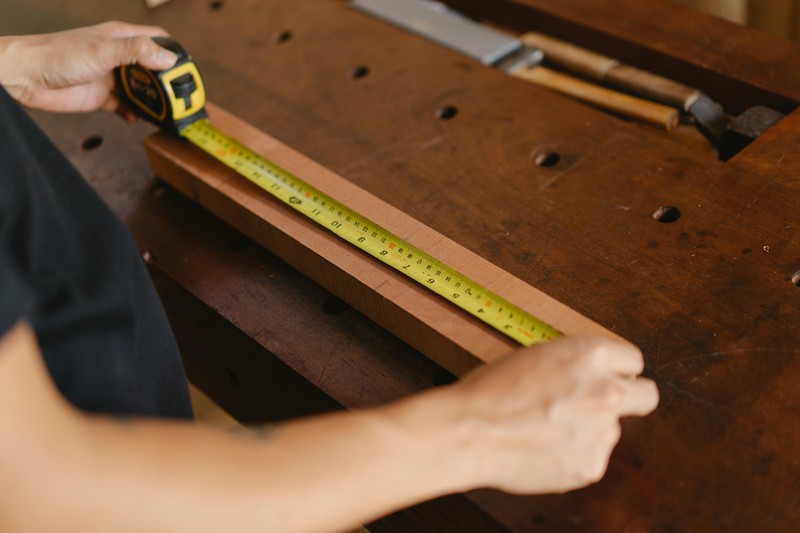
A common rule of thumb is to cut your band so its resting length is roughly one-third of the distance from the band slot to the furthest notch on your shaft. For example, on a 90cm gun with a standard handle, the distance from the band slot to the shark fin tab might be around 90cm. You’d want a band that stretches to roughly 90cm, so the resting band length should be around 27cm to 30cm. If you prefer pre-made bands rather than cutting your own, looking at pre-cut speargun bands can simplify the process.
If your bands are too short, you’ll get a very high stretch ratio. That means massive initial power but very short power delivery. The shaft accelerates violently then quickly loses steam. Accuracy suffers, and the bands wear out faster because they’re being over-stretched every time you load.
If your bands are too long, the stretch ratio is low. You’ll get a slow, weak shot. The band might not fully engage, and you’ll lose penetration. Getting the length right is a balancing act, and measuring twice before cutting is a good habit.
Single vs. Double Band Configurations: Pros and Cons
Most beginners start with a single band. As they gain experience, they consider adding a second band for more power. Both setups have their place.
Single Band Setup
A single band is simpler. It’s easier to load, the gun handles better, and it’s more forgiving on accuracy. For reef hunting and shots inside 4 meters, a single 16mm or even a single 14mm is often all you need. The gun tracks faster, and you can fire quicker on moving targets. The downside is you’re limited in power on heavier shafts or longer range shots. For smaller guns (75cm–100cm), a single band is standard and works perfectly.
Double Band Setup
Two thinner bands (like two 14mm or two 16mm) can produce more total power than a single thick band. This is common on larger guns (110cm+) for blue water hunting. The advantage is that you can load each band individually, making the total load effort similar to a single thick band, but you get more power at the end. However, a double band setup adds complexity. You have more parts to manage, the gun becomes muzzle-heavy, and tracking can be slower. It also requires precise band length matching to avoid uneven power delivery, which can cause shaft deflection.
Practical advice: For guns under 110cm, stick with a single band. For guns 110cm–130cm targeting larger fish, a double band setup can be worthwhile, but only if you tune them carefully. For blue water guns (130cm+), double bands are almost standard, but you need the physical strength to load them consistently.
Common Mistakes When Choosing Speargun Bands
I’ve seen spearfishers, both new and experienced, make the same errors repeatedly. Here are the most common ones to avoid.
1. Over-powering the gun. The biggest mistake. People think more power is always better. They slap an 18mm band on a 90cm gun and wonder why the shaft is all over the place. The gun wasn’t designed for that much energy. The shaft will porpoise, and you’ll miss fish. Match the band to the gun, not your ego.
2. Using mismatched bands in a double setup. If you run two bands, they must be the same diameter and the same length. If one is slightly older or different in diameter, it will stretch at a different rate. This creates unbalanced power, and your shaft will jerk sideways on release. I’ve seen this ruin a perfectly good shot at a nice yellowtail. Keep them matched.
3. Ignoring band age. Bands degrade. UV light, saltwater, and heat all break down the rubber. A band that’s two years old looks fine but has lost much of its elasticity. You’re effectively shooting with a weak, inconsistent band. Fresh bands are a cheap upgrade. Replace them every 6 to 12 months if you dive regularly. Having a spare set of speargun replacement bands on hand can save a dive trip when a band fails unexpectedly.
4. Choosing diameter based only on power. Power isn’t everything. Loading effort matters. If you can’t load your gun consistently in the water—especially in choppy conditions or after a few dives—you’ll hesitate or miss opportunities. Pick a diameter you can load comfortably every time.
Does Band Material Matter? Latex vs. Rubber vs. Silicone
Most speargun bands are made from latex. It’s the standard for a reason. Good quality latex offers a good balance of power, longevity, and cost. Brands like Riffe, Mako, and Aimrite use high-grade latex that performs well.
Rubber bands are less common. They tend to be stiffer and less elastic than latex. They last longer in harsh conditions but feel harder to load for the same power output. I wouldn’t recommend them for most spearfishers, as latex is generally superior.
Silicone bands are a premium option. They are known for very consistent power output and excellent elasticity. They don’t degrade as quickly from UV exposure. However, they are significantly more expensive. For most hunters, standard high-quality latex is the best value. If you are competing or want every advantage, silicone bands can be worth the cost, but only if your gun is already well-tuned otherwise.
Bottom line: stick with good latex unless you have a specific reason to upgrade. Avoid cheap no-name rubber bands that claim high performance but fail after a few trips.
How to Match Bands to Your Speargun and Target Species
Here is a practical scenario-based guide. This is not a fixed rule, but a proven starting point for tuning.
- 75cm gun – Reef species (snapper, bream, small kingfish): Single 14mm band. Easy to load, accurate at close range. Perfect for holes and ledges.
- 90cm gun – Mixed reef and medium pelagics (small tuna, yellowtail): Single 16mm band. This is the most versatile setup. Works well for most conditions.
- 110cm gun – Larger pelagics (wahoo, medium tuna): Single 16mm band or double 14mm bands. The double setup gives you more reach, but single is easier to handle. I prefer single for reef and double for open water.
- 130cm gun – Large game (big tuna, dogtooth, Goliath): Double 16mm or double 18mm bands depending on shaft weight. This is a heavy setup. Only use if you are physically prepared for the load.
Shaft weight matters too. A heavier shaft (like a 7.5mm vs 6.5mm) requires more power to accelerate properly. If you run a heavy shaft, you may need a thicker band or double bands to match. Conversely, a light shaft with a thick band will not fly straight.
Tools and Accessories for Band Setup and Maintenance
Having the right tools makes band setup easier and safer. A good band puller is essential. It saves your fingers and gives you better leverage when loading bands onto the muzzle. Look for one with a comfortable grip. Browsing speargun band pullers can help you find a model that fits your hand well.
Pre-tied wishbones are a time-saver. They come in different lengths and materials. Dyneema wishbones are popular for their strength and low friction. Keep a few spares in your gear bag.
Band thread is used for tying your own wishbones or splicing bands. It’s cheap and lasts a long time. I keep a spool in my maintenance kit just in case I need to replace a wishbone on the boat.
An extra set of bands is always a good idea. Bands can break at the worst time. Having a spare set means you’re not losing a dive day. Consider buying a backup set that matches your primary setup.
When to Replace Your Speargun Bands
Bands don’t last forever. Check them before every trip. Look for cracks, especially near the ends where they attach to the muzzle or wishbone. Nicks or cuts mean the band is compromised and can fail under load.
Loss of elasticity is harder to spot, but you’ll feel it. If your gun doesn’t shoot as hard as it used to, or if the band feels loose when loading, it’s time for a replacement. As a rule of thumb, replace your bands every 6 to 12 months if you dive weekly. If you dive less often, once a year is fine. But if you leave your gun in direct sunlight, UV damage will accelerate degradation significantly.
Don’t wait for a band to snap in the water. A broken band mid-shot is not only frustrating but can damage your shaft or gun. Fresh bands are relatively inexpensive compared to the cost of a new shaft or a missed trophy fish.
Final Recommendations: Start with This Setup
If you’re a beginner or intermediate spearfisher, start with a single 16mm band on a 90cm gun. This is a proven baseline that works for a wide range of conditions. It’s powerful enough for most fish you’ll encounter and light enough to load comfortably all day.
From there, you can experiment. Try a 14mm band for more accuracy on smaller reef fish, or add a second 16mm band for longer range on larger pelagics. Tuning is personal. What works for me might not be perfect for you, but this baseline gives you a solid foundation to build on.
Ready to dial in your speargun? Start with a reliable set of bands and the right tools to get the most out of your setup.
Frequently Asked Questions About Speargun Bands
How tight should my bands be?
They should feel firm when loading, not loose or overly stiff. A good test is to hook one band on the wishbone and feel the resistance. You should be able to load it comfortably without straining. If it feels like you’re fighting the band, it’s probably too short or too thick.
Can I mix different diameter bands?
Generally, no. Mixing diameters creates uneven power delivery. One band will stretch more than the other, causing unbalanced force on the shaft. If you want a double setup, use two bands of the same diameter and length.
Do bands lose power over time?
Yes, absolutely. Latex loses elasticity as it ages and is exposed to UV and saltwater. After a few months, you’ll notice a drop in power. This is why regular replacement is important for consistent performance.
What is the best band for a beginner?
A single 16mm latex band on a 90cm gun. It’s forgiving, versatile, and easy to learn on. As you gain experience, you can experiment with other diameters and configurations.
How many bands do I need for blue water?
For blue water hunting, you generally want more power. A 110cm or 120cm gun with double 16mm bands is a common setup. For larger guns (130cm+), double 18mm bands are used. But remember, you need to be able to load them consistently in the water.